8 June
•
2026
Verslunarmannahelgi: Commerce Day in Iceland Weekend Guide
Read Time
4 min
8 June
•
2026
Verslunarmannahelgi: Commerce Day in Iceland Weekend Guide
Read Time
4 min
8 June
•
2026
Verslunarmannahelgi: Commerce Day in Iceland Weekend Guide
Read Time
4 min
The Long Weekend: Guide to Iceland’s Verslunarmannahelgi
The Long Weekend: Guide to Iceland’s Verslunarmannahelgi
The Long Weekend: Guide to Iceland’s Verslunarmannahelgi
Verslunarmannahelgi means "Commerce Day Weekend," and yes, it is exactly as hard to pronounce as it looks. The funny part is that shop workers are among the last people who actually get to enjoy it. Here is what happens, where people go, and how to join in.
What Is Verslunarmannahelgi?
Verslunarmannahelgi is Iceland's biggest summer public holiday, and it started as a day off for shopkeepers. The idea came from Denmark, though Denmark no longer observes it. Iceland kept it, made it its own, and has not looked back since. The first observance took place on September 13, 1894, in Reykjavík.
Commerce Day in Iceland is no longer just a day off for shop workers. People head out to campsites, outdoor festivals, and live music events across every region. Over the years, one public holiday turned into a full weekend of August celebration. Icelanders now treat it as one of the biggest events of the year.
When Is Verslunarmannahelgi?
Verslunarmannahelgi always falls on the first weekend of August, with the public holiday in Iceland on Monday. Most people start the long weekend from Friday evening and stretch it through Monday. Early August in Iceland brings temperatures around 50°F to 64°F (10°C to 18°C) and up to 18 hours of daylight.
What Does Commerce Day in Iceland Mean for Visitors?
Commerce Day is a public holiday, which means some shops, banks, government offices, and services run on reduced hours or are closed on Monday. It is worth checking ahead of time if you need anything specific that day. Most tourist-facing businesses, restaurants, and petrol stations stay open, but it pays to plan around it.
The weekend itself is one of the best times to experience Iceland, as locals actually live it. Festivals, campsites, and geothermal pools are all busier than usual, in the best possible way.
Verslunarmannahelgi means "Commerce Day Weekend," and yes, it is exactly as hard to pronounce as it looks. The funny part is that shop workers are among the last people who actually get to enjoy it. Here is what happens, where people go, and how to join in.
What Is Verslunarmannahelgi?
Verslunarmannahelgi is Iceland's biggest summer public holiday, and it started as a day off for shopkeepers. The idea came from Denmark, though Denmark no longer observes it. Iceland kept it, made it its own, and has not looked back since. The first observance took place on September 13, 1894, in Reykjavík.
Commerce Day in Iceland is no longer just a day off for shop workers. People head out to campsites, outdoor festivals, and live music events across every region. Over the years, one public holiday turned into a full weekend of August celebration. Icelanders now treat it as one of the biggest events of the year.
When Is Verslunarmannahelgi?
Verslunarmannahelgi always falls on the first weekend of August, with the public holiday in Iceland on Monday. Most people start the long weekend from Friday evening and stretch it through Monday. Early August in Iceland brings temperatures around 50°F to 64°F (10°C to 18°C) and up to 18 hours of daylight.
What Does Commerce Day in Iceland Mean for Visitors?
Commerce Day is a public holiday, which means some shops, banks, government offices, and services run on reduced hours or are closed on Monday. It is worth checking ahead of time if you need anything specific that day. Most tourist-facing businesses, restaurants, and petrol stations stay open, but it pays to plan around it.
The weekend itself is one of the best times to experience Iceland, as locals actually live it. Festivals, campsites, and geothermal pools are all busier than usual, in the best possible way.
Verslunarmannahelgi means "Commerce Day Weekend," and yes, it is exactly as hard to pronounce as it looks. The funny part is that shop workers are among the last people who actually get to enjoy it. Here is what happens, where people go, and how to join in.
What Is Verslunarmannahelgi?
Verslunarmannahelgi is Iceland's biggest summer public holiday, and it started as a day off for shopkeepers. The idea came from Denmark, though Denmark no longer observes it. Iceland kept it, made it its own, and has not looked back since. The first observance took place on September 13, 1894, in Reykjavík.
Commerce Day in Iceland is no longer just a day off for shop workers. People head out to campsites, outdoor festivals, and live music events across every region. Over the years, one public holiday turned into a full weekend of August celebration. Icelanders now treat it as one of the biggest events of the year.
When Is Verslunarmannahelgi?
Verslunarmannahelgi always falls on the first weekend of August, with the public holiday in Iceland on Monday. Most people start the long weekend from Friday evening and stretch it through Monday. Early August in Iceland brings temperatures around 50°F to 64°F (10°C to 18°C) and up to 18 hours of daylight.
What Does Commerce Day in Iceland Mean for Visitors?
Commerce Day is a public holiday, which means some shops, banks, government offices, and services run on reduced hours or are closed on Monday. It is worth checking ahead of time if you need anything specific that day. Most tourist-facing businesses, restaurants, and petrol stations stay open, but it pays to plan around it.
The weekend itself is one of the best times to experience Iceland, as locals actually live it. Festivals, campsites, and geothermal pools are all busier than usual, in the best possible way.
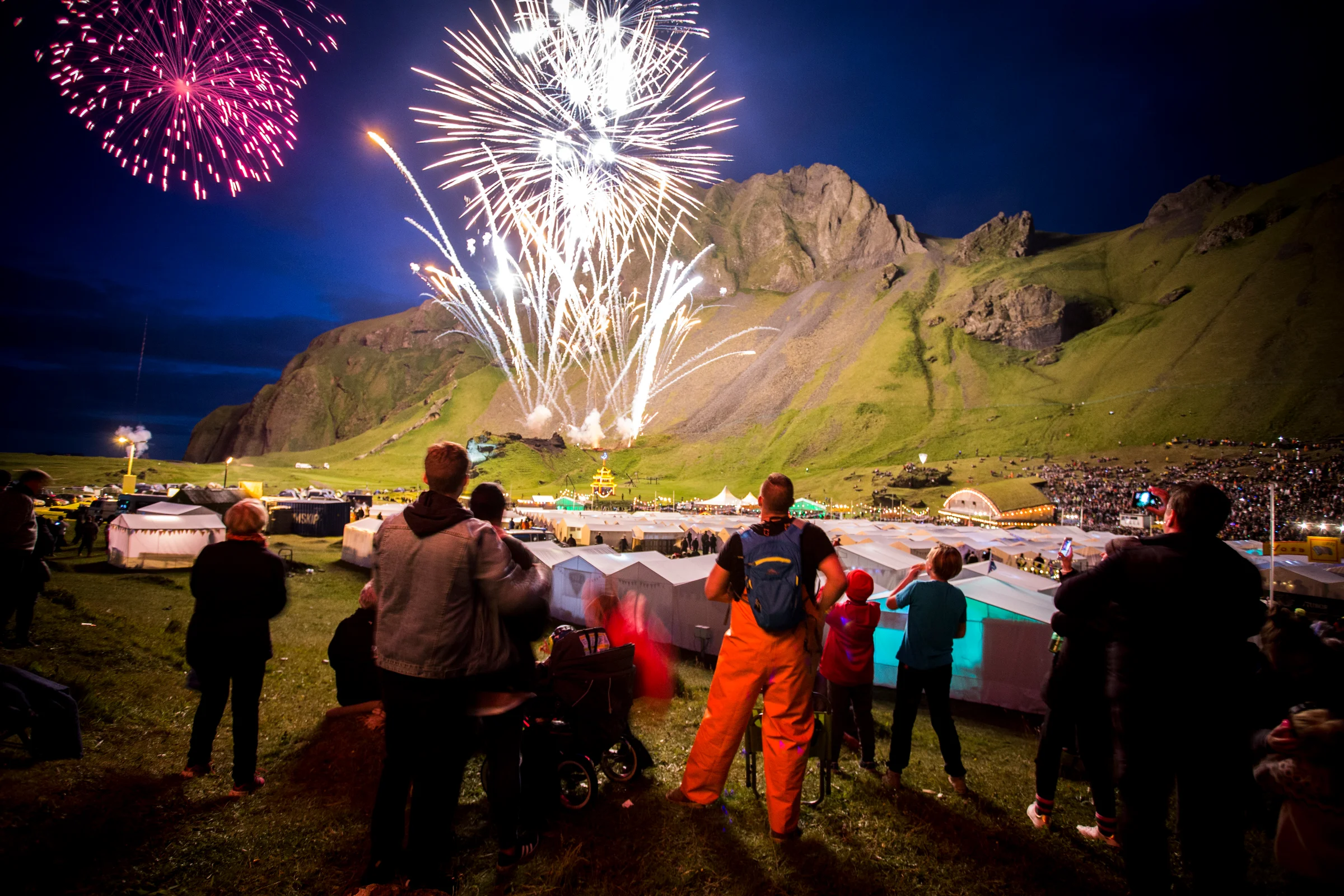
From the grassy ridges overlooking Herjólfsdalur Valley on Heimaey Island, spectators gather to watch the sky fill with color during Þjóðhátíð í Eyjum. As the centerpiece of the August Verslunarmannahelgi weekend, this landmark celebration transforms the Westman Islands into a shared community of music and heritage beneath a striking volcanic landscape. It remains a powerful reflection of the connection and collective joy that define modern Icelandic culture. Photo: Ófeigur Lýðsson
The parliamentarians Svava Jakobsdóttir and Sigurlaug Bjarnadóttir deliver a speech to motivate the members of parliament on Women’s Day in 1975. Photographer unknown. Preservation: Women’s History Archive of Iceland.
Geothermal hot water has made Iceland a global destination for spa and wellness tourism, with facilities like the Forest Lagoon in North Iceland offering year-round relaxation in naturally heated pools surrounded by nature.
How Do Icelanders Celebrate Verslunarmannahelgi?
Tents go up, BBQs come out, and live music plays across the country from Reykjavík to Vestmannaeyjar (Westman Islands). Icelanders celebrate in one of two ways:
Camping trip
Cars loaded with tents, BBQ gear, and enough food for three days
Lamb on the grill, a bonfire going, and a sun that barely sets
Campsites fill up fast, but the atmosphere makes it worth it
Summer cabin
Simple cottages near geothermal rivers or lakes
Quieter pace, deeply loved by Icelanders
No cabin? A countryside guesthouse gives you the same feel
Both groups end up sharing the same things: bonfires, sing-alongs, geothermal pools, and long summer evenings that stretch well past midnight.
The Biggest Festivals During the Commerce Day Weekend
Festivals run across Iceland every Verslunarmannahelgi. Here are the three worth knowing about.
1. Þjóðhátíð í Eyjum (Westman Islands)
Þjóðhátíð í Eyjum is held in Herjólfsdalur Valley on Heimaey, the largest of the Westman Islands. The island's normal population of about 4,000 can swell to over 15,000 during the festival. It dates back to 1874, when bad weather kept Westman Islanders from reaching the mainland for Iceland's millennial celebrations.
Expect live music, bonfires, fireworks, and a communal singalong on Sunday evening. A new festival song is written each year, keeping the tradition fresh. Getting there requires a ferry from Landeyjahöfn, about a 35-minute ride, and ferries book out weeks in advance.
2. Innipúkinn, Reykjavík
Innipúkinn translates to "indoor person" or "homebody," which tells you exactly what kind of festival this is. It runs for about three nights in downtown Reykjavík and has been running since the early 2000s. If tenting is not your thing, this is where you want to be on a trip to Iceland. Bars, restaurants, and nightlife are all within easy walking distance.
3. Ein með öllu, Akureyri
Ein með öllu is held in Akureyri, North Iceland's largest town, about 384 km (239 miles) from Reykjavík. The name translates as "one with everything," which is exactly how Icelanders order a hot dog. It is a family-friendly outdoor festival with a funfair, street performances, concerts, and a closing fireworks show.
How Do Icelanders Celebrate Verslunarmannahelgi?
Tents go up, BBQs come out, and live music plays across the country from Reykjavík to Vestmannaeyjar (Westman Islands). Icelanders celebrate in one of two ways:
Camping trip
Cars loaded with tents, BBQ gear, and enough food for three days
Lamb on the grill, a bonfire going, and a sun that barely sets
Campsites fill up fast, but the atmosphere makes it worth it
Summer cabin
Simple cottages near geothermal rivers or lakes
Quieter pace, deeply loved by Icelanders
No cabin? A countryside guesthouse gives you the same feel
Both groups end up sharing the same things: bonfires, sing-alongs, geothermal pools, and long summer evenings that stretch well past midnight.
The Biggest Festivals During the Commerce Day Weekend
Festivals run across Iceland every Verslunarmannahelgi. Here are the three worth knowing about.
1. Þjóðhátíð í Eyjum (Westman Islands)
Þjóðhátíð í Eyjum is held in Herjólfsdalur Valley on Heimaey, the largest of the Westman Islands. The island's normal population of about 4,000 can swell to over 15,000 during the festival. It dates back to 1874, when bad weather kept Westman Islanders from reaching the mainland for Iceland's millennial celebrations.
Expect live music, bonfires, fireworks, and a communal singalong on Sunday evening. A new festival song is written each year, keeping the tradition fresh. Getting there requires a ferry from Landeyjahöfn, about a 35-minute ride, and ferries book out weeks in advance.
2. Innipúkinn, Reykjavík
Innipúkinn translates to "indoor person" or "homebody," which tells you exactly what kind of festival this is. It runs for about three nights in downtown Reykjavík and has been running since the early 2000s. If tenting is not your thing, this is where you want to be on a trip to Iceland. Bars, restaurants, and nightlife are all within easy walking distance.
3. Ein með öllu, Akureyri
Ein með öllu is held in Akureyri, North Iceland's largest town, about 384 km (239 miles) from Reykjavík. The name translates as "one with everything," which is exactly how Icelanders order a hot dog. It is a family-friendly outdoor festival with a funfair, street performances, concerts, and a closing fireworks show.
How Do Icelanders Celebrate Verslunarmannahelgi?
Tents go up, BBQs come out, and live music plays across the country from Reykjavík to Vestmannaeyjar (Westman Islands). Icelanders celebrate in one of two ways:
Camping trip
Cars loaded with tents, BBQ gear, and enough food for three days
Lamb on the grill, a bonfire going, and a sun that barely sets
Campsites fill up fast, but the atmosphere makes it worth it
Summer cabin
Simple cottages near geothermal rivers or lakes
Quieter pace, deeply loved by Icelanders
No cabin? A countryside guesthouse gives you the same feel
Both groups end up sharing the same things: bonfires, sing-alongs, geothermal pools, and long summer evenings that stretch well past midnight.
The Biggest Festivals During the Commerce Day Weekend
Festivals run across Iceland every Verslunarmannahelgi. Here are the three worth knowing about.
1. Þjóðhátíð í Eyjum (Westman Islands)
Þjóðhátíð í Eyjum is held in Herjólfsdalur Valley on Heimaey, the largest of the Westman Islands. The island's normal population of about 4,000 can swell to over 15,000 during the festival. It dates back to 1874, when bad weather kept Westman Islanders from reaching the mainland for Iceland's millennial celebrations.
Expect live music, bonfires, fireworks, and a communal singalong on Sunday evening. A new festival song is written each year, keeping the tradition fresh. Getting there requires a ferry from Landeyjahöfn, about a 35-minute ride, and ferries book out weeks in advance.
2. Innipúkinn, Reykjavík
Innipúkinn translates to "indoor person" or "homebody," which tells you exactly what kind of festival this is. It runs for about three nights in downtown Reykjavík and has been running since the early 2000s. If tenting is not your thing, this is where you want to be on a trip to Iceland. Bars, restaurants, and nightlife are all within easy walking distance.
3. Ein með öllu, Akureyri
Ein með öllu is held in Akureyri, North Iceland's largest town, about 384 km (239 miles) from Reykjavík. The name translates as "one with everything," which is exactly how Icelanders order a hot dog. It is a family-friendly outdoor festival with a funfair, street performances, concerts, and a closing fireworks show.
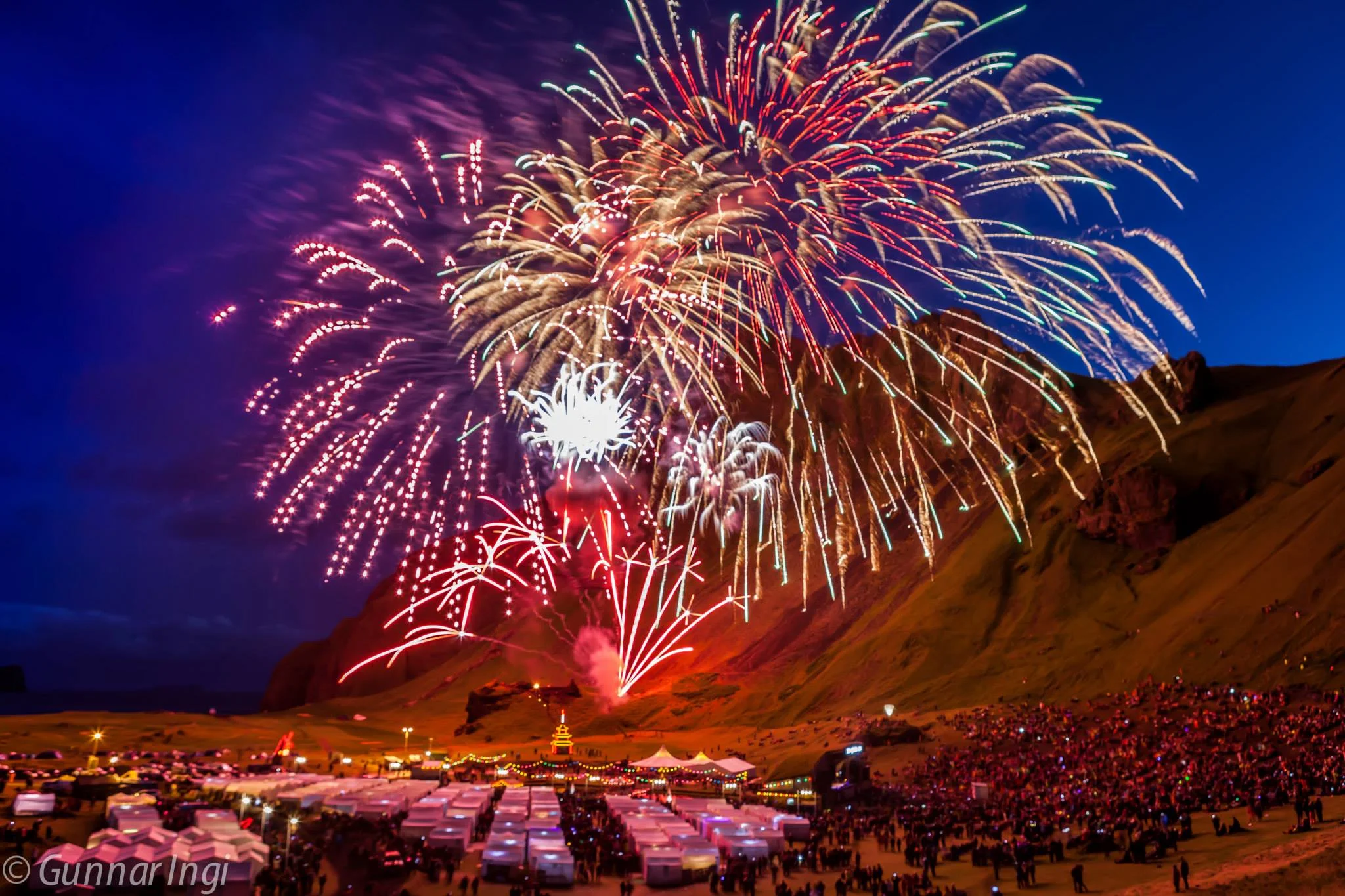
The peak of the summer long weekend unfolds in Herjólfsdalur Valley on Heimaey Island during the historic Þjóðhátíð festival. Every August, thousands gather in the Westman Islands, transforming the volcanic landscape into a vibrant community of music and shared heritage. The celebration showcases a unique combination of dramatic terrain and collective joy, reflecting the deep-rooted spirit of connection that defines modern Icelandic culture. Photo: Gunnar Ingi Gíslason
The parliamentarians Svava Jakobsdóttir and Sigurlaug Bjarnadóttir deliver a speech to motivate the members of parliament on Women’s Day in 1975. Photographer unknown. Preservation: Women’s History Archive of Iceland.
Geothermal hot water has made Iceland a global destination for spa and wellness tourism, with facilities like the Forest Lagoon in North Iceland offering year-round relaxation in naturally heated pools surrounded by nature.
Tips for Your Trip to Iceland During the Verslunarmannahelgi
This is one of the busiest weekends Iceland sees all year. The earlier you sort the details, the more you actually get to enjoy. Here is what to take care of before you go.
Book early
Festival tickets, campsite spots, and ferries to the Westman Islands sell out weeks before the weekend. The Herjólfsdalur campsite for Þjóðhátíð fills particularly fast. Lock in accommodation the moment you know your dates.
Plan your driving
Friday afternoon and Monday evening are the busiest times on Icelandic roads. Heading out on Thursday or early Friday morning avoids the worst of it. Fill up on fuel before leaving the city, as remote stations can run low. Sheep on roads are more common in rural areas, so slow down and watch for them.
Pack for all weather
A day in Iceland in early August can bring sunshine or sideways rain, with temperatures ranging from 50°F to 64°F (13°C to 18°C) within the same afternoon. Bring waterproof layers, a warm mid-layer, and something light for the good stretches. If it is a camping trip, a proper sleeping bag, an insulated mat, and a groundsheet are most important.
Go beyond the main festivals
Smaller towns across Iceland host their own local events during the long weekend. Festivals take place in Neskaupstaður (East Iceland), Siglufjörður (North Iceland), Borgarnes (West Iceland), and Flúðir (South Iceland). Each has its own character and a pace that feels more local than the bigger events. See more Iceland Events here.
Ready to Experience Verslunarmannahelgi?
If you want to see Iceland during one of its most social, music-filled, and unmistakably local summer weekends, Verslunarmannahelgi is hard to beat. You can join a major festival, head for a smaller town celebration, or simply follow the long weekend energy wherever it leads. The earlier you start planning your trip to Iceland, the more of it you will actually get to enjoy.
Tips for Your Trip to Iceland During the Verslunarmannahelgi
This is one of the busiest weekends Iceland sees all year. The earlier you sort the details, the more you actually get to enjoy. Here is what to take care of before you go.
Book early
Festival tickets, campsite spots, and ferries to the Westman Islands sell out weeks before the weekend. The Herjólfsdalur campsite for Þjóðhátíð fills particularly fast. Lock in accommodation the moment you know your dates.
Plan your driving
Friday afternoon and Monday evening are the busiest times on Icelandic roads. Heading out on Thursday or early Friday morning avoids the worst of it. Fill up on fuel before leaving the city, as remote stations can run low. Sheep on roads are more common in rural areas, so slow down and watch for them.
Pack for all weather
A day in Iceland in early August can bring sunshine or sideways rain, with temperatures ranging from 50°F to 64°F (13°C to 18°C) within the same afternoon. Bring waterproof layers, a warm mid-layer, and something light for the good stretches. If it is a camping trip, a proper sleeping bag, an insulated mat, and a groundsheet are most important.
Go beyond the main festivals
Smaller towns across Iceland host their own local events during the long weekend. Festivals take place in Neskaupstaður (East Iceland), Siglufjörður (North Iceland), Borgarnes (West Iceland), and Flúðir (South Iceland). Each has its own character and a pace that feels more local than the bigger events. See more Iceland Events here.
Ready to Experience Verslunarmannahelgi?
If you want to see Iceland during one of its most social, music-filled, and unmistakably local summer weekends, Verslunarmannahelgi is hard to beat. You can join a major festival, head for a smaller town celebration, or simply follow the long weekend energy wherever it leads. The earlier you start planning your trip to Iceland, the more of it you will actually get to enjoy.
“We have the vote,” said writer and parliamentarian Svava Jakobsdóttir, speaking at Reykjavík’s Women’s Day Off rally on October 24, 1975. “And we’re proud of it. But what we seem to forget is that we also fought for the right to run for office.”
Her words came six decades after Icelandic women had won the vote. Yet by 1975, only nine women had ever served in parliament. At the time, just three women, a mere 5% of Alþingi members, held seats, and that was the highest number to date. Only one woman had ever served as a cabinet minister, and for just one year, in 1970.
In comparison, the other Nordic countries had already moved ahead, with women making up 14–26% of their national parliaments and frequently serving in government. Local representation in Iceland was even lower: women made up less than 4% of municipal representatives in 1975.