•
UNESCO Honors Icelandic Pool Culture in 2025
Read Time
4 min
•
UNESCO Honors Icelandic Pool Culture in 2025
Read Time
4 min
•
UNESCO Honors Icelandic Pool Culture in 2025
Read Time
4 min
A Warm Welcome to Iceland’s Swimming Pool Culture
A Warm Welcome to Iceland’s Swimming Pool Culture
A Warm Welcome to Iceland’s Swimming Pool Culture
It has been said by Icelanders that if it were not for the abundant geothermal hot water on this island in the middle of the North Atlantic, there would be hardly anyone willing to live here. Indeed, the bountiful hot water is a blessing. It heats homes, provides electricity, and, perhaps most importantly, provides the water for Iceland’s iconic year-round swimming pools across much of the country.
For most non-Icelanders, the thought of swimming in an outdoor pool in the middle of winter is inconceivable. Indeed, for the uninitiated, seeing plumes of steam rising from the local pool is a wondrous sight, with people gathering in the warm water, frequently while snow falls around them. Here, conversations drift across hot tubs, kids noisily splash down water slides, and bathers talk politics, gossip, and, of course, the weather forecast.
In Iceland, the phrase “going for a swim” rarely means doing laps. More often, it means soaking, chatting, warming up, cooling down, and simply being together. This everyday ritual is so central to Icelandic life that in 2025, UNESCO recognized Icelandic swimming pool culture as part of the world’s Intangible Cultural Heritage, marking Iceland’s first-ever independent nomination to the list.
It has been said by Icelanders that if it were not for the abundant geothermal hot water on this island in the middle of the North Atlantic, there would be hardly anyone willing to live here. Indeed, the bountiful hot water is a blessing. It heats homes, provides electricity, and, perhaps most importantly, provides the water for Iceland’s iconic year-round swimming pools across much of the country.
For most non-Icelanders, the thought of swimming in an outdoor pool in the middle of winter is inconceivable. Indeed, for the uninitiated, seeing plumes of steam rising from the local pool is a wondrous sight, with people gathering in the warm water, frequently while snow falls around them. Here, conversations drift across hot tubs, kids noisily splash down water slides, and bathers talk politics, gossip, and, of course, the weather forecast.
In Iceland, the phrase “going for a swim” rarely means doing laps. More often, it means soaking, chatting, warming up, cooling down, and simply being together. This everyday ritual is so central to Icelandic life that in 2025, UNESCO recognized Icelandic swimming pool culture as part of the world’s Intangible Cultural Heritage, marking Iceland’s first-ever independent nomination to the list.
It has been said by Icelanders that if it were not for the abundant geothermal hot water on this island in the middle of the North Atlantic, there would be hardly anyone willing to live here. Indeed, the bountiful hot water is a blessing. It heats homes, provides electricity, and, perhaps most importantly, provides the water for Iceland’s iconic year-round swimming pools across much of the country.
For most non-Icelanders, the thought of swimming in an outdoor pool in the middle of winter is inconceivable. Indeed, for the uninitiated, seeing plumes of steam rising from the local pool is a wondrous sight, with people gathering in the warm water, frequently while snow falls around them. Here, conversations drift across hot tubs, kids noisily splash down water slides, and bathers talk politics, gossip, and, of course, the weather forecast.
In Iceland, the phrase “going for a swim” rarely means doing laps. More often, it means soaking, chatting, warming up, cooling down, and simply being together. This everyday ritual is so central to Icelandic life that in 2025, UNESCO recognized Icelandic swimming pool culture as part of the world’s Intangible Cultural Heritage, marking Iceland’s first-ever independent nomination to the list.
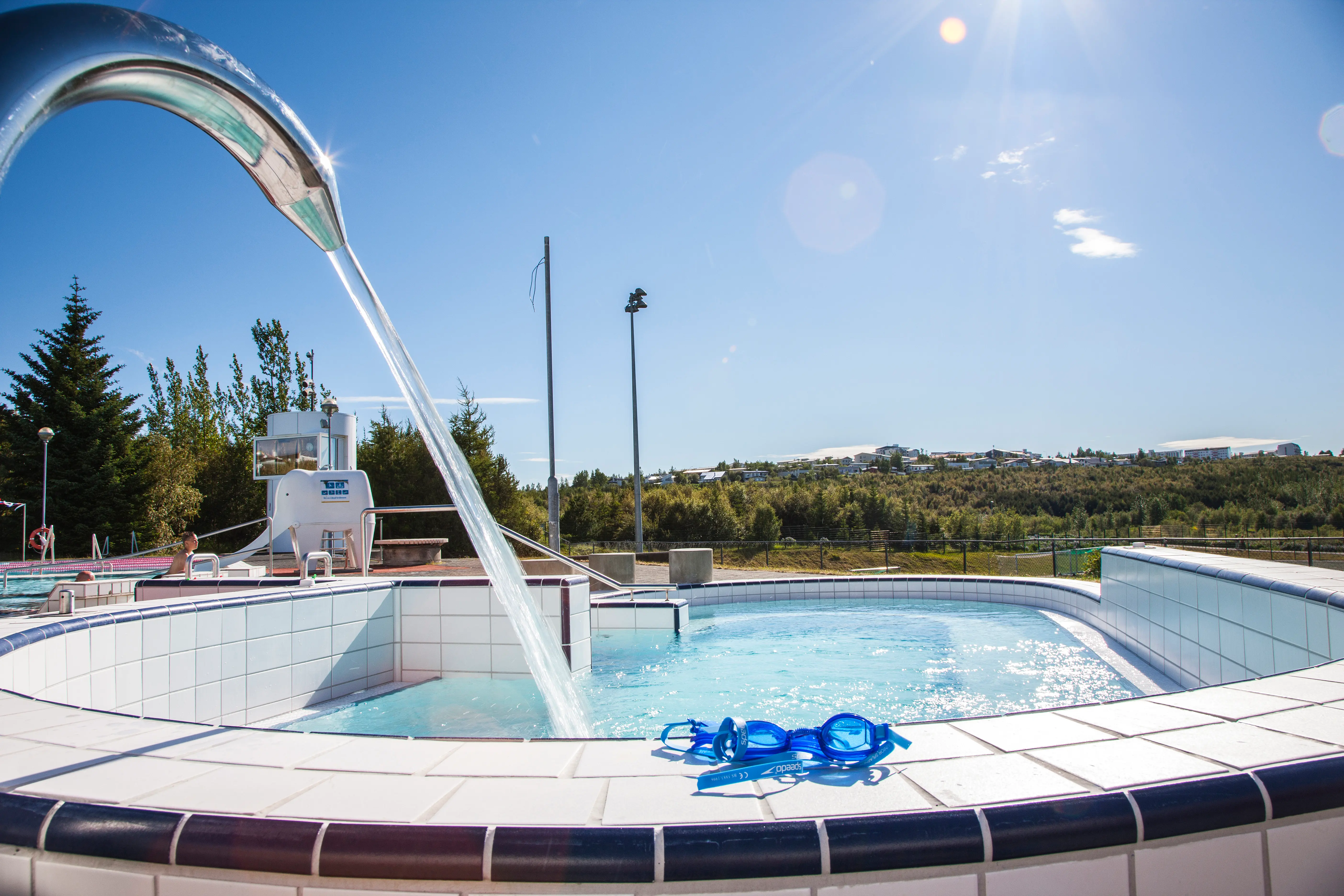
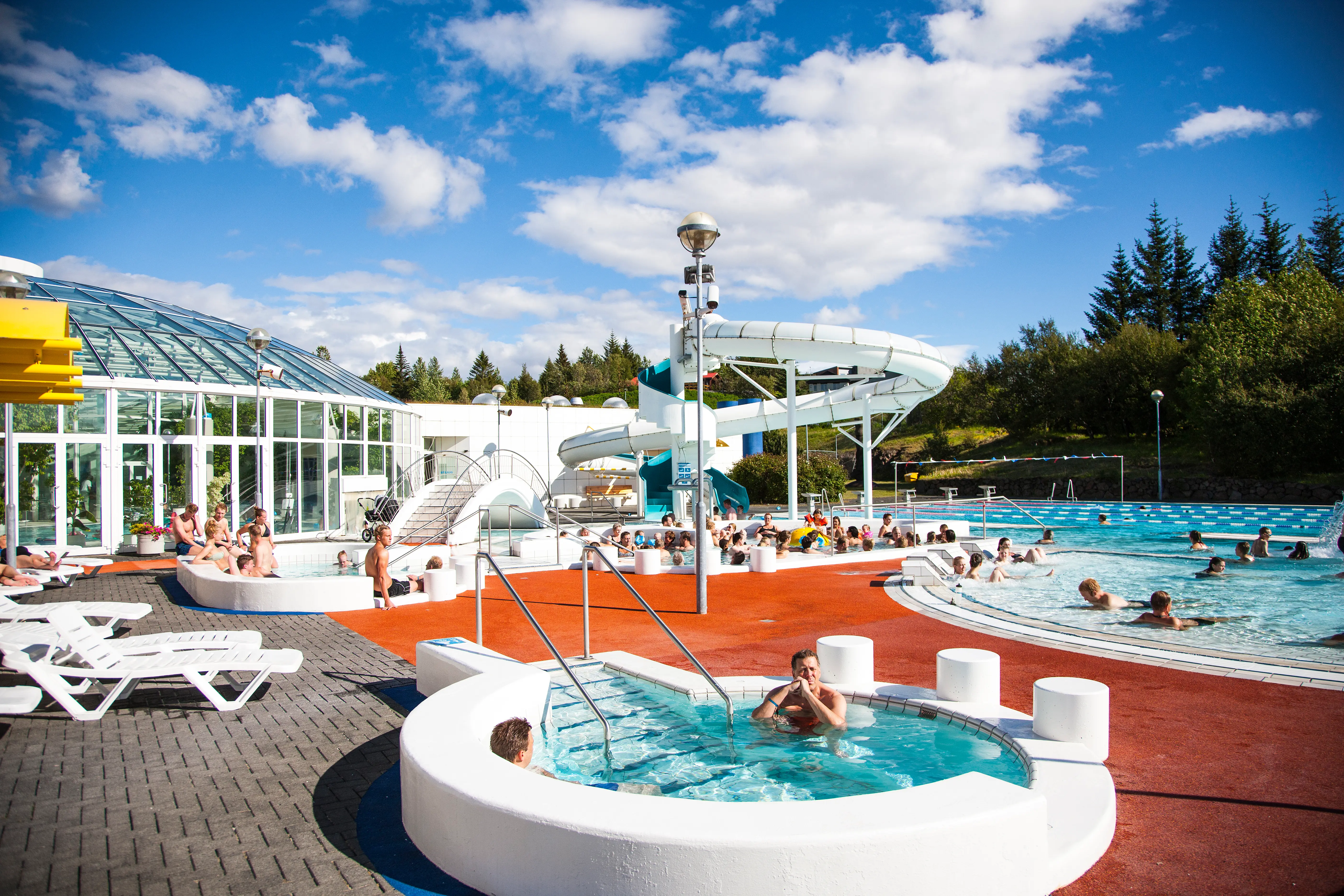
From bright summer afternoons to snowy winter days and steamy night swims, Iceland’s geothermal pools stay warm and welcoming year-round. A tradition UNESCO has now recognized. Photos: City of Reykjavík
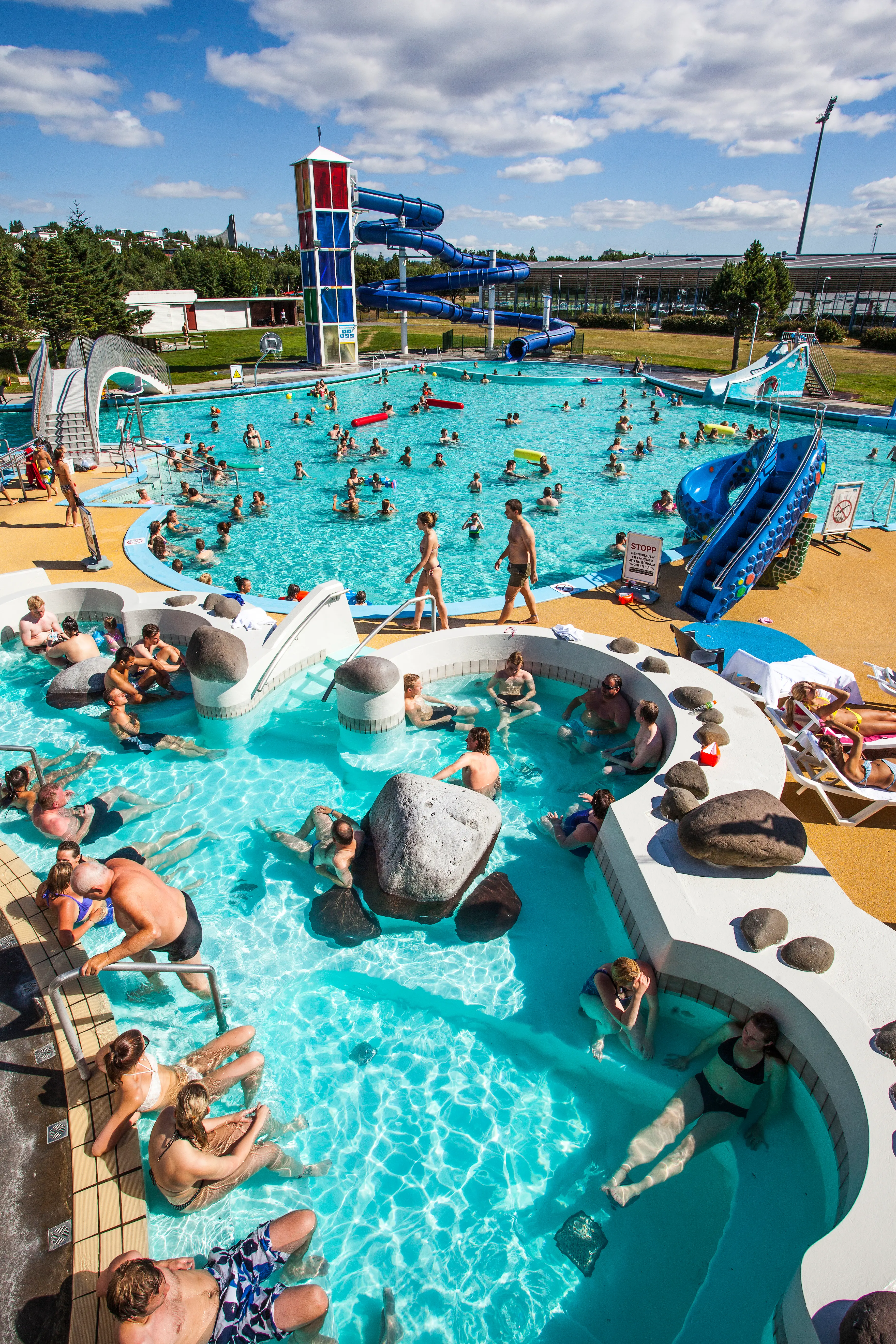
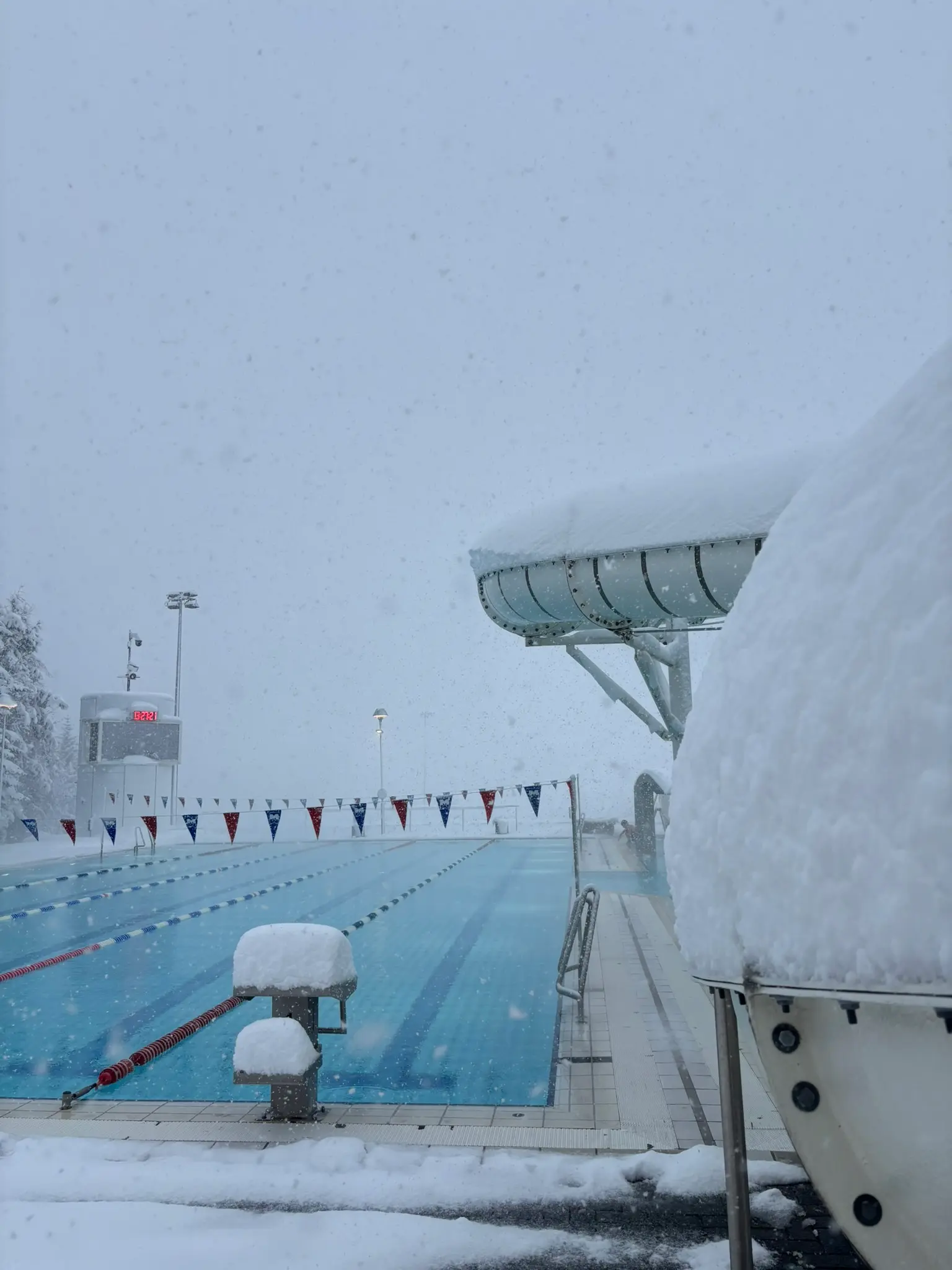
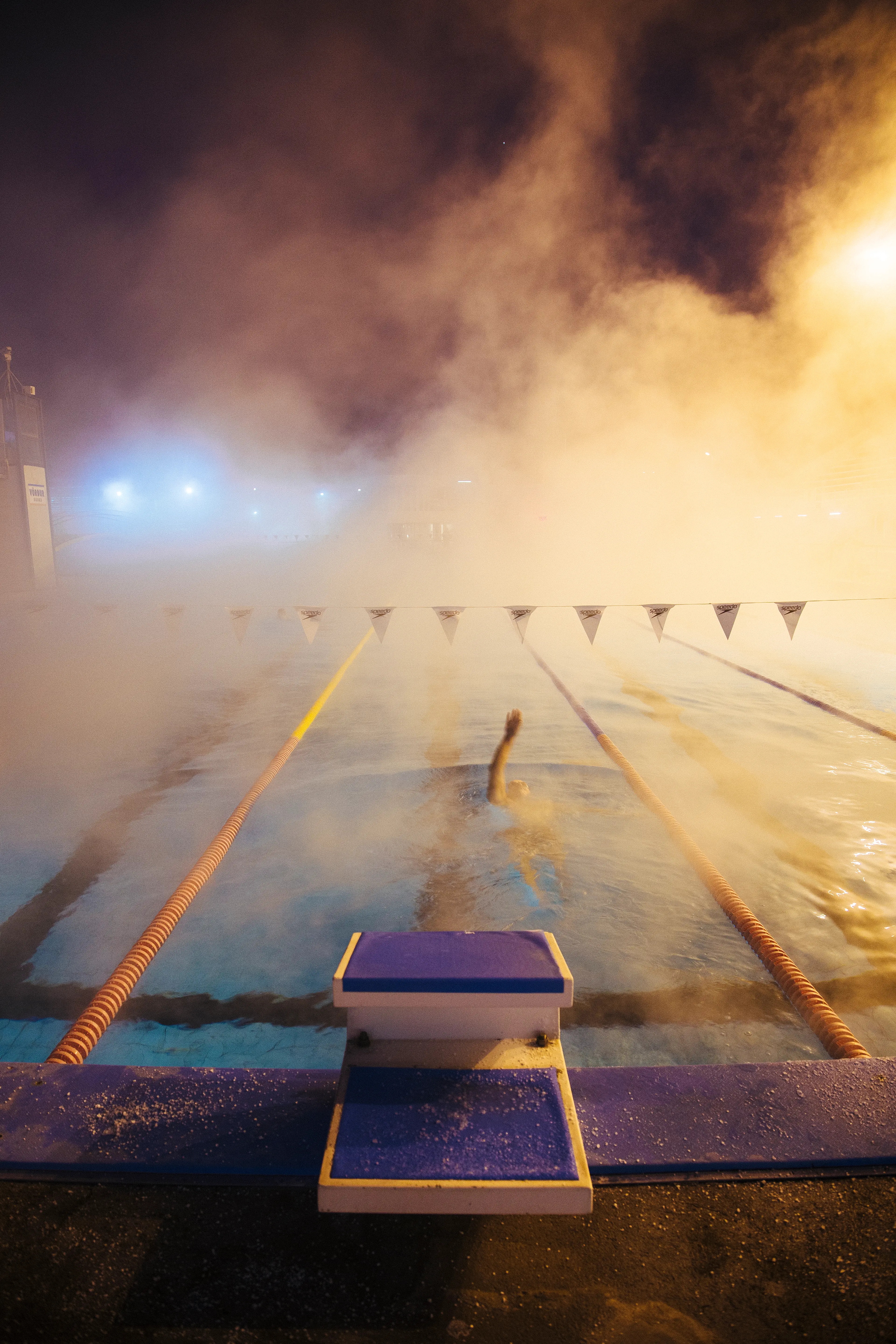
From bright summer afternoons to snowy winter days and steamy night swims, Iceland’s geothermal pools stay warm and welcoming year-round. A tradition UNESCO has now recognized. Photos: City of Reykjavík
From bright summer afternoons to snowy winter days and steamy night swims, Iceland’s geothermal pools stay warm and welcoming year-round. A tradition UNESCO has now recognized. Photos: City of Reykjavík
A Tradition Built for Survival
A Tradition Built for Survival
A Tradition Built for Survival
Iceland’s pool culture did not begin as a recreational initiative. It started as a national necessity. In the early 20th century, Iceland lost many fishermen and sailors to drowning, prompting a growing awareness of the need for swimming and water safety skills.
In 1925, Iceland granted municipalities the authority to introduce compulsory swimming instruction, and many communities responded by building their first pools. This local momentum later led to national legislation in 1940, which made swimming mandatory for all children and required schools to teach basic swimming techniques alongside water rescue and CPR skills. These actions firmly embedded swimming into Icelandic education and public life and continue to set the country apart today. Only six other nations currently require swimming instruction by law.
To support this commitment, swimming pools began appearing across Iceland. Early facilities were practical and straightforward, designed primarily for instruction. Over time, many schools built pools on their grounds to ensure access for students. This legal foundation remains in place today. Article 11 of Iceland’s Sport Laws states that, “All children in the country shall learn to swim unless deemed unable to do so by a school doctor.” Swimming as part of the school curriculum has undoubtedly saved many lives.
While fewer Icelanders work at sea today than in the early 1900s, the role of swimming pools has continued to evolve. Modern pools bear little resemblance to their early predecessors. Many now compare to small water parks, with waterslides, splash areas, pool toys, and a range of hot tubs designed for relaxation.
Moreover, Icelandic pools are designed for everyone to use. Most facilities offer excellent accessibility, including ramps, lifts, accessible changing rooms, and warm shallow areas that make entering the water comfortable for people with different mobility needs. Affordability is also a key part of the culture. Admission fees are deliberately kept low, and many Icelanders use annual passes or ten-visit “clip cards,” which make regular pool visits remarkably inexpensive. This commitment to access and affordability reflects the idea that pools are not luxuries but essential public spaces that support the well-being of the entire community.
Iceland’s pool culture did not begin as a recreational initiative. It started as a national necessity. In the early 20th century, Iceland lost many fishermen and sailors to drowning, prompting a growing awareness of the need for swimming and water safety skills.
In 1925, Iceland granted municipalities the authority to introduce compulsory swimming instruction, and many communities responded by building their first pools. This local momentum later led to national legislation in 1940, which made swimming mandatory for all children and required schools to teach basic swimming techniques alongside water rescue and CPR skills. These actions firmly embedded swimming into Icelandic education and public life and continue to set the country apart today. Only six other nations currently require swimming instruction by law.
To support this commitment, swimming pools began appearing across Iceland. Early facilities were practical and straightforward, designed primarily for instruction. Over time, many schools built pools on their grounds to ensure access for students. This legal foundation remains in place today. Article 11 of Iceland’s Sport Laws states that, “All children in the country shall learn to swim unless deemed unable to do so by a school doctor.” Swimming as part of the school curriculum has undoubtedly saved many lives.
While fewer Icelanders work at sea today than in the early 1900s, the role of swimming pools has continued to evolve. Modern pools bear little resemblance to their early predecessors. Many now compare to small water parks, with waterslides, splash areas, pool toys, and a range of hot tubs designed for relaxation.
Moreover, Icelandic pools are designed for everyone to use. Most facilities offer excellent accessibility, including ramps, lifts, accessible changing rooms, and warm shallow areas that make entering the water comfortable for people with different mobility needs. Affordability is also a key part of the culture. Admission fees are deliberately kept low, and many Icelanders use annual passes or ten-visit “clip cards,” which make regular pool visits remarkably inexpensive. This commitment to access and affordability reflects the idea that pools are not luxuries but essential public spaces that support the well-being of the entire community.
Iceland’s pool culture did not begin as a recreational initiative. It started as a national necessity. In the early 20th century, Iceland lost many fishermen and sailors to drowning, prompting a growing awareness of the need for swimming and water safety skills.
In 1925, Iceland granted municipalities the authority to introduce compulsory swimming instruction, and many communities responded by building their first pools. This local momentum later led to national legislation in 1940, which made swimming mandatory for all children and required schools to teach basic swimming techniques alongside water rescue and CPR skills. These actions firmly embedded swimming into Icelandic education and public life and continue to set the country apart today. Only six other nations currently require swimming instruction by law.
To support this commitment, swimming pools began appearing across Iceland. Early facilities were practical and straightforward, designed primarily for instruction. Over time, many schools built pools on their grounds to ensure access for students. This legal foundation remains in place today. Article 11 of Iceland’s Sport Laws states that, “All children in the country shall learn to swim unless deemed unable to do so by a school doctor.” Swimming as part of the school curriculum has undoubtedly saved many lives.
While fewer Icelanders work at sea today than in the early 1900s, the role of swimming pools has continued to evolve. Modern pools bear little resemblance to their early predecessors. Many now compare to small water parks, with waterslides, splash areas, pool toys, and a range of hot tubs designed for relaxation.
Moreover, Icelandic pools are designed for everyone to use. Most facilities offer excellent accessibility, including ramps, lifts, accessible changing rooms, and warm shallow areas that make entering the water comfortable for people with different mobility needs. Affordability is also a key part of the culture. Admission fees are deliberately kept low, and many Icelanders use annual passes or ten-visit “clip cards,” which make regular pool visits remarkably inexpensive. This commitment to access and affordability reflects the idea that pools are not luxuries but essential public spaces that support the well-being of the entire community.
Powered by Geothermal Energy
Powered by Geothermal Energy
Powered by Geothermal Energy
Most of Iceland’s more than 120 pools are heated by geothermal water from boreholes deep underground. This naturally warm water is constantly replenished, and the energy footprint of running outdoor pools is surprisingly low. In many communities, the pools are close to geothermal wells, allowing the warm water to move efficiently from the source to the pool with minimal infrastructure.
The connection between Iceland’s active geology and daily life is one of the defining features of Icelandic pool culture. The pools are not only public services but also quiet reminders of how closely Icelanders live with the forces just below the water.
As Reykjavík Mayor Heiða Björg Hilmisdóttir keenly emphasized, “Geothermal energy and our swimming pools are a vital part of Reykjavík’s culture and history, and we are proud of this UNESCO recognition. The eight pools operated by the City of Reykjavík each have their own identity and atmosphere, yet all offer a sanctuary in a busy world. Everyone is indeed equal in the water, and there is nothing more wonderful than seeing people of all ages gathering in the pools to nourish body and mind.”
“We have the vote,” said writer and parliamentarian Svava Jakobsdóttir, speaking at Reykjavík’s Women’s Day Off rally on October 24, 1975. “And we’re proud of it. But what we seem to forget is that we also fought for the right to run for office.”
Her words came six decades after Icelandic women had won the vote. Yet by 1975, only nine women had ever served in parliament. At the time, just three women, a mere 5% of Alþingi members, held seats, and that was the highest number to date. Only one woman had ever served as a cabinet minister, and for just one year, in 1970.
In comparison, the other Nordic countries had already moved ahead, with women making up 14–26% of their national parliaments and frequently serving in government. Local representation in Iceland was even lower: women made up less than 4% of municipal representatives in 1975.
Most of Iceland’s more than 120 pools are heated by geothermal water from boreholes deep underground. This naturally warm water is constantly replenished, and the energy footprint of running outdoor pools is surprisingly low. In many communities, the pools are close to geothermal wells, allowing the warm water to move efficiently from the source to the pool with minimal infrastructure.
The connection between Iceland’s active geology and daily life is one of the defining features of Icelandic pool culture. The pools are not only public services but also quiet reminders of how closely Icelanders live with the forces just below the water.
As Reykjavík Mayor Heiða Björg Hilmisdóttir keenly emphasized, “Geothermal energy and our swimming pools are a vital part of Reykjavík’s culture and history, and we are proud of this UNESCO recognition. The eight pools operated by the City of Reykjavík each have their own identity and atmosphere, yet all offer a sanctuary in a busy world. Everyone is indeed equal in the water, and there is nothing more wonderful than seeing people of all ages gathering in the pools to nourish body and mind.”
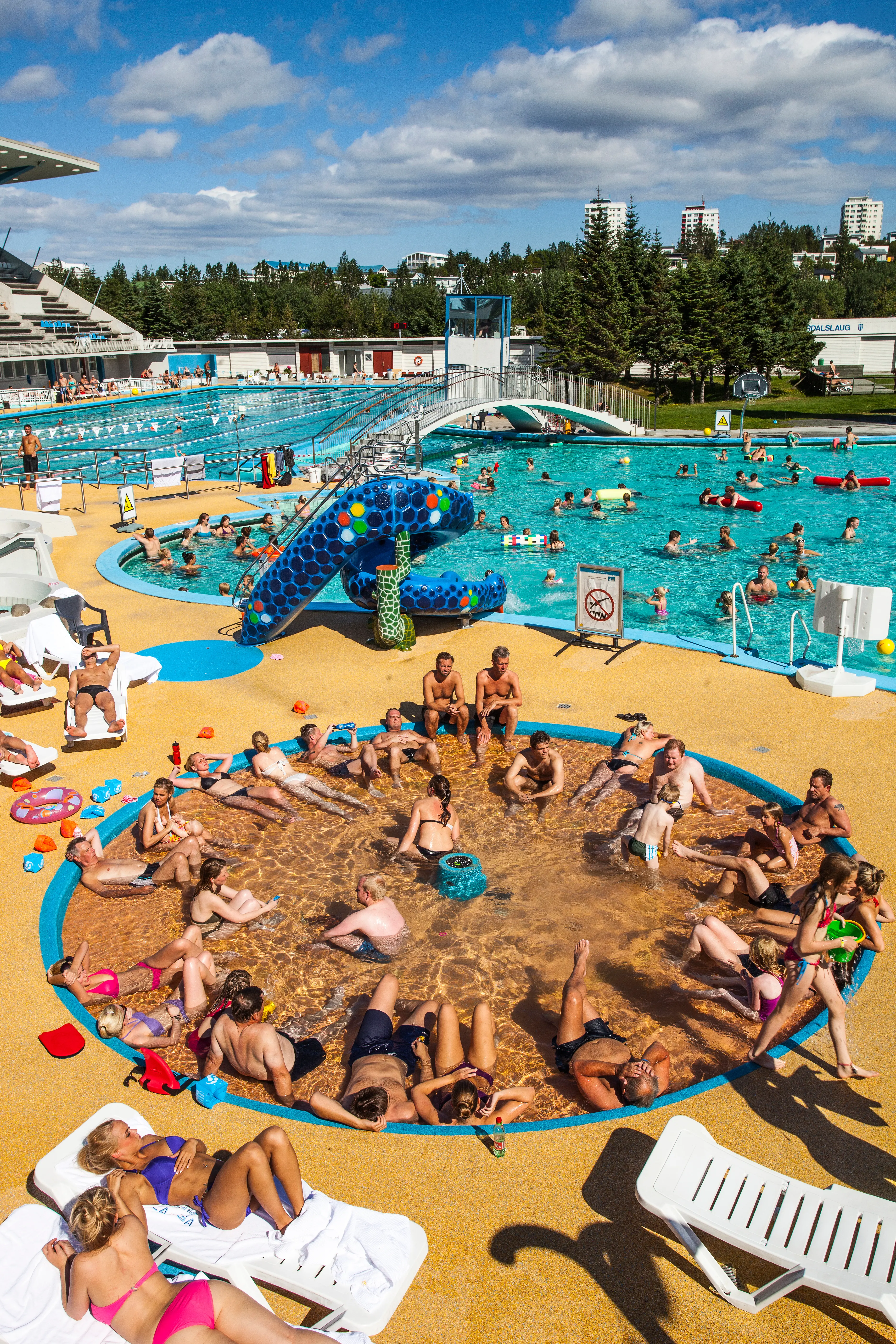
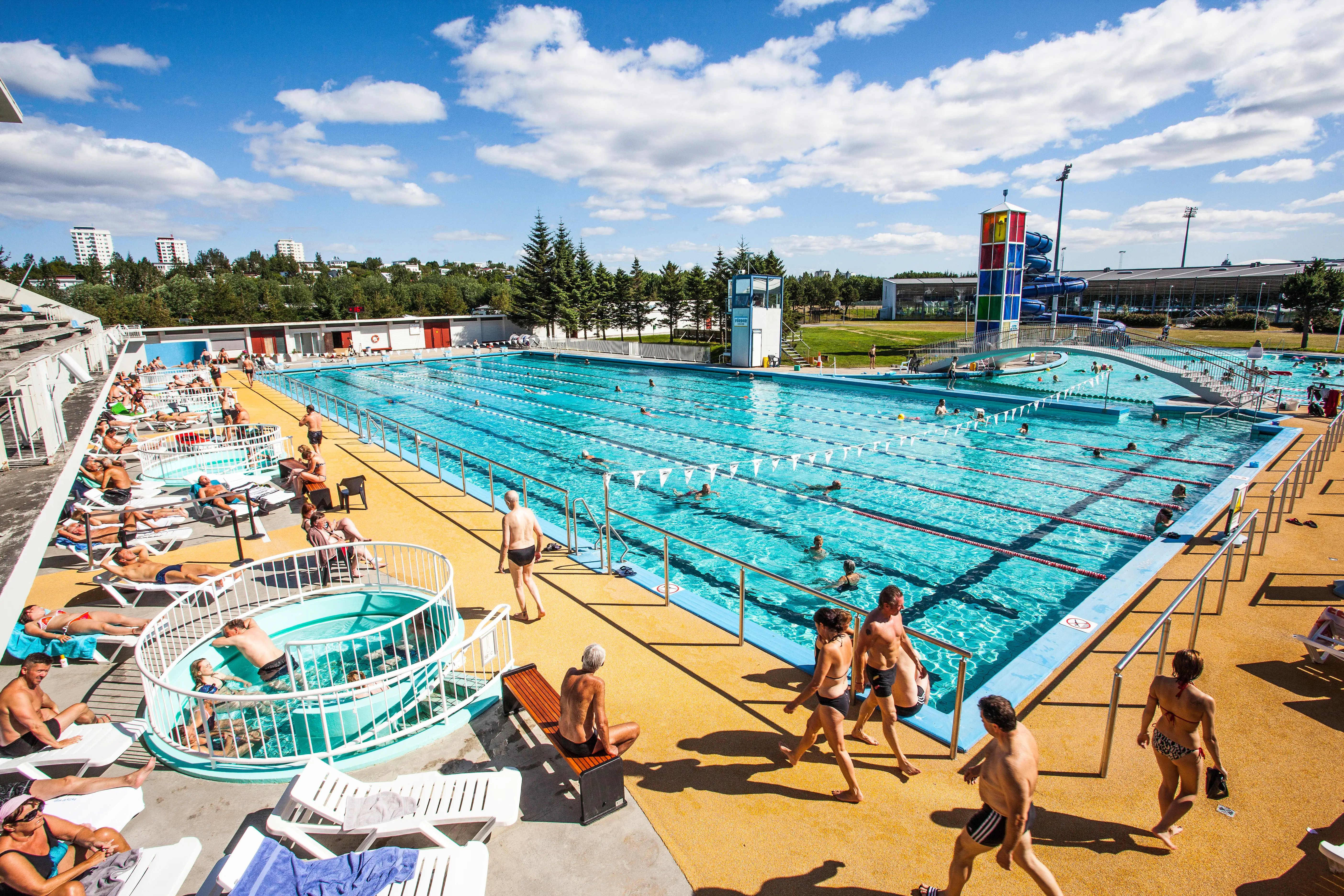
A summer afternoon at Laugardalslaug, Reykjavík’s largest geothermal pool, where locals and visitors mingle in lap lanes, hot tubs, and warm outdoor pools, a vibrant example of the everyday swimming culture now recognized by UNESCO as part of Iceland’s Intangible Cultural Heritage. Photo: City of Reykjavík
Geothermal hot water has made Iceland a global destination for spa and wellness tourism, with facilities like the Forest Lagoon in North Iceland offering year-round relaxation in naturally heated pools surrounded by nature.
The parliamentarians Svava Jakobsdóttir and Sigurlaug Bjarnadóttir deliver a speech to motivate the members of parliament on Women’s Day in 1975. Photographer unknown. Preservation: Women’s History Archive of Iceland.
Why UNESCO Took Notice
Why UNESCO Took Notice
Why UNESCO Took Notice
UNESCO’s recognition confirms something Icelanders have always felt: these pools are more than recreation. They are a distinct part of the cultural heritage. While many may have first come to the pools to learn to swim, they stayed for the warmth of the water and the human connection.
“I warmly welcome UNESCO’s confirmation of what we already know: Icelandic pool culture is unlike anything else. The inscription is also an important reminder of the cultural treasure found in our pool tradition. Filling a concrete basin with water is one thing, but the conversations and the time spent together, often between very different people who may know each other little or not at all, is something entirely different,” said Logi Einarsson, Minister of Culture, Innovation, and Higher Education.
The nomination, led by the National Museum of Iceland and supported by communities across the country, highlighted how the pools act as shared spaces where people come together on equal footing. This recognition places Iceland alongside other UNESCO luminaries such as the French baguette, Reggae music, Flamenco dancing, the Diwali Festival of Lights, and Swiss yodeling. It is Iceland’s first-ever independent inscription on the list, marking a major milestone for a tradition that has shaped the country for nearly a century.
UNESCO’s recognition confirms something Icelanders have always felt: these pools are more than recreation. They are a distinct part of the cultural heritage. While many may have first come to the pools to learn to swim, they stayed for the warmth of the water and the human connection.
“I warmly welcome UNESCO’s confirmation of what we already know: Icelandic pool culture is unlike anything else. The inscription is also an important reminder of the cultural treasure found in our pool tradition. Filling a concrete basin with water is one thing, but the conversations and the time spent together, often between very different people who may know each other little or not at all, is something entirely different,” said Logi Einarsson, Minister of Culture, Innovation, and Higher Education.
The nomination, led by the National Museum of Iceland and supported by communities across the country, highlighted how the pools act as shared spaces where people come together on equal footing. This recognition places Iceland alongside other UNESCO luminaries such as the French baguette, Reggae music, Flamenco dancing, the Diwali Festival of Lights, and Swiss yodeling. It is Iceland’s first-ever independent inscription on the list, marking a major milestone for a tradition that has shaped the country for nearly a century.
UNESCO’s recognition confirms something Icelanders have always felt: these pools are more than recreation. They are a distinct part of the cultural heritage. While many may have first come to the pools to learn to swim, they stayed for the warmth of the water and the human connection.
“I warmly welcome UNESCO’s confirmation of what we already know: Icelandic pool culture is unlike anything else. The inscription is also an important reminder of the cultural treasure found in our pool tradition. Filling a concrete basin with water is one thing, but the conversations and the time spent together, often between very different people who may know each other little or not at all, is something entirely different,” said Logi Einarsson, Minister of Culture, Innovation, and Higher Education.
The nomination, led by the National Museum of Iceland and supported by communities across the country, highlighted how the pools act as shared spaces where people come together on equal footing. This recognition places Iceland alongside other UNESCO luminaries such as the French baguette, Reggae music, Flamenco dancing, the Diwali Festival of Lights, and Swiss yodeling. It is Iceland’s first-ever independent inscription on the list, marking a major milestone for a tradition that has shaped the country for nearly a century.
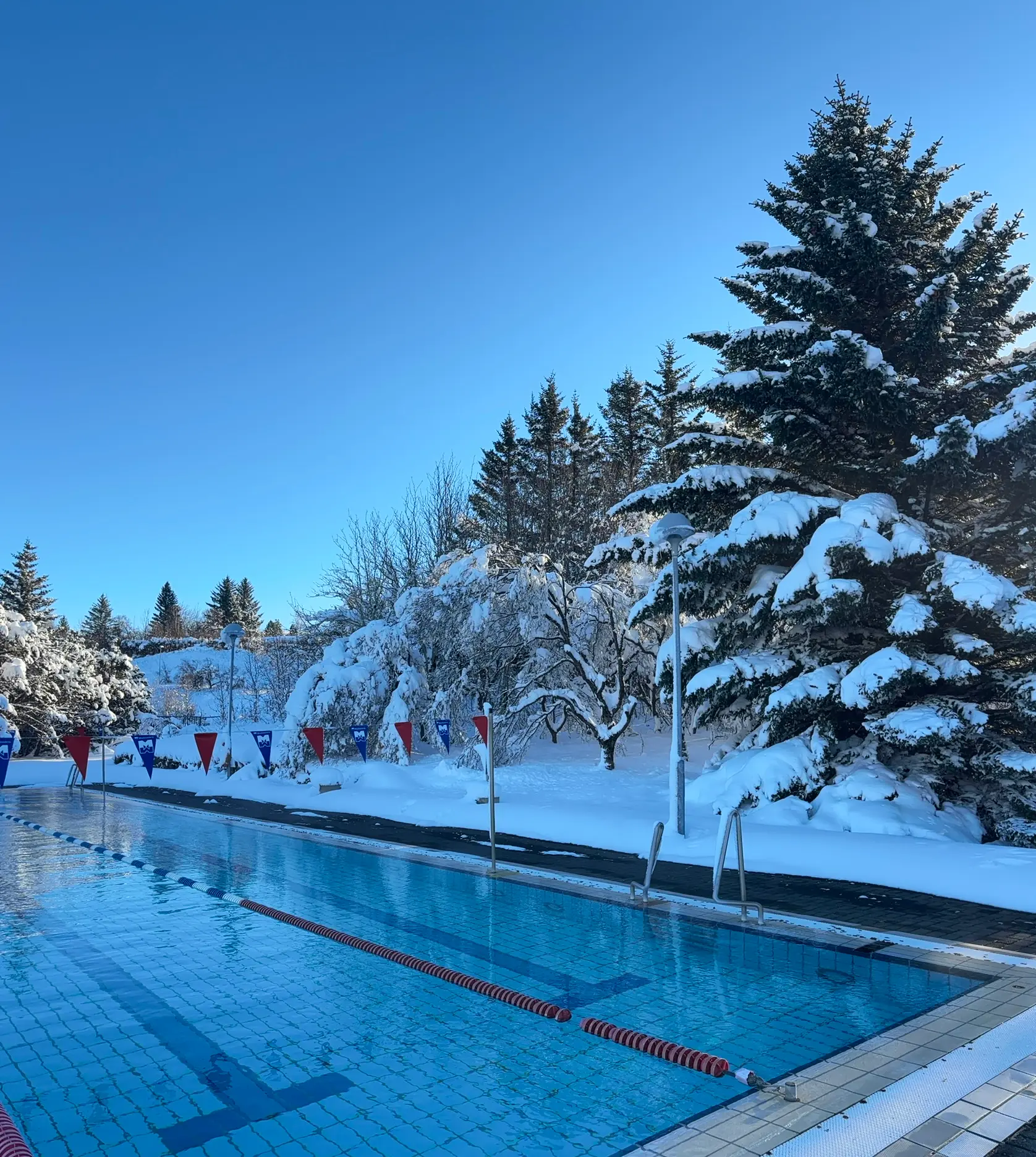
Blue skies, fresh snow and warm water. Winter at Árbaejarlaug shows why Icelanders swim outdoors throughout the year. Photo: City of Reykjavík
Keep your eyes open. Geothermal boreholes like this one are a common sight around Reykjavík, quietly tapping into the earth’s natural heat to supply clean, renewable hot water and heating to homes, businesses, and public buildings across the city.
A statue of Ingibjörg H. Bjarnason unveiled in front of Alþingi in 2015, marking the 100th anniversary of women's suffrage in Iceland.
Pack Your Bathing Suit and Soak In Tradition
Pack Your Bathing Suit and Soak In Tradition
Pack Your Bathing Suit and Soak In Tradition
When visitors often ask what to pack for traveling to Iceland, those in the know will counterintuitively always say, “A bathing suit” first. And many of those visitors say their first soak is a revelation. The approach to an Icelandic pool is often made in stingingly cold air, yet the water is always inviting. Because of stringent showering regulations before entering the pool, the use of chlorine and other chemicals is minimized.
Whether you come to swim laps, soak in a hot pot, or simply listen to the quiet rhythms of local life, Iceland’s pools offer a window into something essential about the country. The UNESCO recognition celebrates this everyday tradition, but the real joy lies in stepping into the warm water yourself and experiencing a piece of Icelandic culture cherished for generations.
When visitors often ask what to pack for traveling to Iceland, those in the know will counterintuitively always say, “A bathing suit” first. And many of those visitors say their first soak is a revelation. The approach to an Icelandic pool is often made in stingingly cold air, yet the water is always inviting. Because of stringent showering regulations before entering the pool, the use of chlorine and other chemicals is minimized.
Whether you come to swim laps, soak in a hot pot, or simply listen to the quiet rhythms of local life, Iceland’s pools offer a window into something essential about the country. The UNESCO recognition celebrates this everyday tradition, but the real joy lies in stepping into the warm water yourself and experiencing a piece of Icelandic culture cherished for generations.
When visitors often ask what to pack for traveling to Iceland, those in the know will counterintuitively always say, “A bathing suit” first. And many of those visitors say their first soak is a revelation. The approach to an Icelandic pool is often made in stingingly cold air, yet the water is always inviting. Because of stringent showering regulations before entering the pool, the use of chlorine and other chemicals is minimized.
Whether you come to swim laps, soak in a hot pot, or simply listen to the quiet rhythms of local life, Iceland’s pools offer a window into something essential about the country. The UNESCO recognition celebrates this everyday tradition, but the real joy lies in stepping into the warm water yourself and experiencing a piece of Icelandic culture cherished for generations.