•
Two Weeks' Notice: When the World Came to Reykjavík
Read Time
5 Min
•
Two Weeks' Notice: When the World Came to Reykjavík
Read Time
5 Min
•
Two Weeks' Notice: When the World Came to Reykjavík
Read Time
5 Min

Perched close to the shoreline on Borgartún Street in Reykjavík, a white timber house stands with its back to the city and its front to the expansive view of the mountains across the fjord. It was shipped in pieces from Norway in 1909 and assembled initially as the French consul’s residence. For most of its life, it has been a fairly ordinary building with an extraordinary view.
For two days in October 1986, that shoreline address became the center of world attention. Inside the Höfði House, Ronald Reagan and Mikhail Gorbachev sat across a modest table to negotiate the fate of tens of thousands of nuclear warheads. Reykjavík had received barely two weeks’ notice that the leaders of the world’s nuclear superpowers were arriving.
The logistical scramble began immediately. When the American delegation arrived the day before the talks, they were welcomed at Bessastaðir by President Vigdís Finnbogadóttir, a former theater director and literature teacher who, six years earlier, had become the first woman in the world to be democratically elected head of state.
Iceland had hosted global spectacles before, but nothing on this scale, and never with so little time to prepare.
Perched close to the shoreline on Borgartún Street in Reykjavík, a white timber house stands with its back to the city and its front to the expansive view of the mountains across the fjord. It was shipped in pieces from Norway in 1909 and assembled initially as the French consul’s residence. For most of its life, it has been a fairly ordinary building with an extraordinary view.
For two days in October 1986, that shoreline address became the center of world attention. Inside the Höfði House, Ronald Reagan and Mikhail Gorbachev sat across a modest table to negotiate the fate of tens of thousands of nuclear warheads. Reykjavík had received barely two weeks’ notice that the leaders of the world’s nuclear superpowers were arriving.
The logistical scramble began immediately. When the American delegation arrived the day before the talks, they were welcomed at Bessastaðir by President Vigdís Finnbogadóttir, a former theater director and literature teacher who, six years earlier, had become the first woman in the world to be democratically elected head of state.
Iceland had hosted global spectacles before, but nothing on this scale, and never with so little time to prepare.
Perched close to the shoreline on Borgartún Street in Reykjavík, a white timber house stands with its back to the city and its front to the expansive view of the mountains across the fjord. It was shipped in pieces from Norway in 1909 and assembled initially as the French consul’s residence. For most of its life, it has been a fairly ordinary building with an extraordinary view.
For two days in October 1986, that shoreline address became the center of world attention. Inside the Höfði House, Ronald Reagan and Mikhail Gorbachev sat across a modest table to negotiate the fate of tens of thousands of nuclear warheads. Reykjavík had received barely two weeks’ notice that the leaders of the world’s nuclear superpowers were arriving.
The logistical scramble began immediately. When the American delegation arrived the day before the talks, they were welcomed at Bessastaðir by President Vigdís Finnbogadóttir, a former theater director and literature teacher who, six years earlier, had become the first woman in the world to be democratically elected head of state.
Iceland had hosted global spectacles before, but nothing on this scale, and never with so little time to prepare.
Höfði House was built in 1909 for the French consul in Reykjavík. It later became the home of poet Einar Benediktsson and then the British Embassy, before the city bought it in 1958 for official receptions. On October 11 and 12, 1986, Ronald Reagan and Mikhail Gorbachev met inside. Photo: Laurentgauthier / Wikimedia Commons, CC BY-SA 3.0
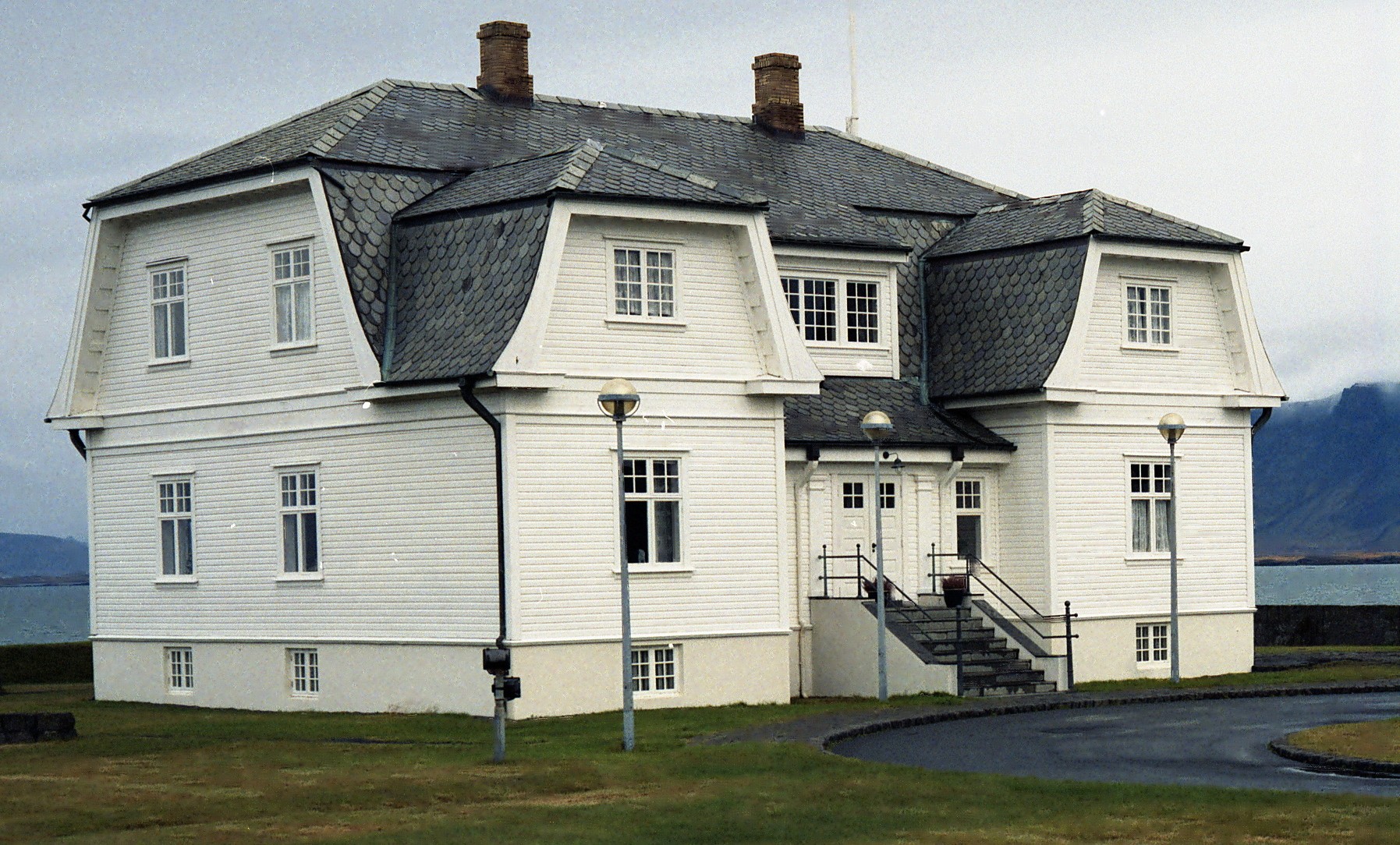
Höfði House was built in 1909 for the French consul in Reykjavík. It later became the home of poet Einar Benediktsson and then the British Embassy, before the city bought it in 1958 for official receptions. On October 11 and 12, 1986, Ronald Reagan and Mikhail Gorbachev met inside. Photo: Laurentgauthier / Wikimedia Commons, CC BY-SA 3.0
Höfði House was built in 1909 for the French consul in Reykjavík. It later became the home of poet Einar Benediktsson and then the British Embassy, before the city bought it in 1958 for official receptions. On October 11 and 12, 1986, Ronald Reagan and Mikhail Gorbachev met inside. Photo: Laurentgauthier / Wikimedia Commons, CC BY-SA 3.0
Why Iceland
Why Iceland
Why Iceland
Soviet General Secretary Mikhail Gorbachev proposed the meeting in a private letter to Ronald Reagan in mid-September 1986. Reagan formally accepted on September 30. Eleven days later, both delegations were on the ground in Reykjavík.
Neither administration billed the gathering as a grand summit at first. It was conceived as an informal working session to clear persistent diplomatic hurdles ahead of a planned state visit to Washington, D.C. That practical ambition made a smaller, neutral setting logical.
Iceland worked for several reasons. Geographically, it offered an almost exact midpoint between Washington and Moscow. Politically, it was a founding member of NATO with no standing military and no nuclear weapons on its soil. Operationally, Reykjavík was compact enough that its streets, airports, and harbor could be secured on very short notice.
Soviet General Secretary Mikhail Gorbachev proposed the meeting in a private letter to Ronald Reagan in mid-September 1986. Reagan formally accepted on September 30. Eleven days later, both delegations were on the ground in Reykjavík.
Neither administration billed the gathering as a grand summit at first. It was conceived as an informal working session to clear persistent diplomatic hurdles ahead of a planned state visit to Washington, D.C. That practical ambition made a smaller, neutral setting logical.
Iceland worked for several reasons. Geographically, it offered an almost exact midpoint between Washington and Moscow. Politically, it was a founding member of NATO with no standing military and no nuclear weapons on its soil. Operationally, Reykjavík was compact enough that its streets, airports, and harbor could be secured on very short notice.
Soviet General Secretary Mikhail Gorbachev proposed the meeting in a private letter to Ronald Reagan in mid-September 1986. Reagan formally accepted on September 30. Eleven days later, both delegations were on the ground in Reykjavík.
Neither administration billed the gathering as a grand summit at first. It was conceived as an informal working session to clear persistent diplomatic hurdles ahead of a planned state visit to Washington, D.C. That practical ambition made a smaller, neutral setting logical.
Iceland worked for several reasons. Geographically, it offered an almost exact midpoint between Washington and Moscow. Politically, it was a founding member of NATO with no standing military and no nuclear weapons on its soil. Operationally, Reykjavík was compact enough that its streets, airports, and harbor could be secured on very short notice.
More Than a Dot on the Map
More Than a Dot on the Map
More Than a Dot on the Map
Iceland in 1986 was far from unaccustomed to Cold War scrutiny. The country had navigated geopolitical friction before, often with quiet resolve.
Fourteen years earlier, during the summer of 1972, the World Chess Championship between Bobby Fischer and Boris Spassky played out over seven tense weeks in Reykjavík. Widely framed by global media as an ideological proxy battle, the match required Icelandic organizers to untangle high-stakes disputes that eventually advanced up to Henry Kissinger and the US State Department.
The capital was also marking a milestone of its own that summer. Having received its municipal charter in 1786, Reykjavík spent August celebrating its bicentennial. The superpowers arrived roughly two months later, handing the city a second and far stranger anniversary in the same year.
Beyond symbolic occasions, Icelanders had spent decades demonstrating their willingness to assert sovereignty against far larger powers. Alþingi, founded at Þingvellir in 930 and among the oldest parliaments in the world, gave Icelanders a long habit of settling their own affairs. During the Cod Wars of the 1950s through the 1970s, Iceland systematically expanded its exclusive fishing zone to 200 nautical miles against fierce British opposition, using its strategic NATO position to secure its economic lifeline.
That alliance position carried weight. Iceland had joined NATO at its founding in 1949, over domestic protest at the time, and a 1951 bilateral defense agreement maintained a United States military presence at Keflavík that lasted until 2006. The maritime corridor linking Greenland, Iceland, and the United Kingdom, known across defense circles as the GIUK gap, was the primary chokepoint through which Western forces tracked Soviet submarine movements entering the North Atlantic.
Iceland was not chosen because it was a “neutral zone” in the ocean. It was chosen because it was already trusted, engaged, and strategically credible.
Iceland in 1986 was far from unaccustomed to Cold War scrutiny. The country had navigated geopolitical friction before, often with quiet resolve.
Fourteen years earlier, during the summer of 1972, the World Chess Championship between Bobby Fischer and Boris Spassky played out over seven tense weeks in Reykjavík. Widely framed by global media as an ideological proxy battle, the match required Icelandic organizers to untangle high-stakes disputes that eventually advanced up to Henry Kissinger and the US State Department.
The capital was also marking a milestone of its own that summer. Having received its municipal charter in 1786, Reykjavík spent August celebrating its bicentennial. The superpowers arrived roughly two months later, handing the city a second and far stranger anniversary in the same year.
Beyond symbolic occasions, Icelanders had spent decades demonstrating their willingness to assert sovereignty against far larger powers. Alþingi, founded at Þingvellir in 930 and among the oldest parliaments in the world, gave Icelanders a long habit of settling their own affairs. During the Cod Wars of the 1950s through the 1970s, Iceland systematically expanded its exclusive fishing zone to 200 nautical miles against fierce British opposition, using its strategic NATO position to secure its economic lifeline.
That alliance position carried weight. Iceland had joined NATO at its founding in 1949, over domestic protest at the time, and a 1951 bilateral defense agreement maintained a United States military presence at Keflavík that lasted until 2006. The maritime corridor linking Greenland, Iceland, and the United Kingdom, known across defense circles as the GIUK gap, was the primary chokepoint through which Western forces tracked Soviet submarine movements entering the North Atlantic.
Iceland was not chosen because it was a “neutral zone” in the ocean. It was chosen because it was already trusted, engaged, and strategically credible.
Iceland in 1986 was far from unaccustomed to Cold War scrutiny. The country had navigated geopolitical friction before, often with quiet resolve.
Fourteen years earlier, during the summer of 1972, the World Chess Championship between Bobby Fischer and Boris Spassky played out over seven tense weeks in Reykjavík. Widely framed by global media as an ideological proxy battle, the match required Icelandic organizers to untangle high-stakes disputes that eventually advanced up to Henry Kissinger and the US State Department.
The capital was also marking a milestone of its own that summer. Having received its municipal charter in 1786, Reykjavík spent August celebrating its bicentennial. The superpowers arrived roughly two months later, handing the city a second and far stranger anniversary in the same year.
Beyond symbolic occasions, Icelanders had spent decades demonstrating their willingness to assert sovereignty against far larger powers. Alþingi, founded at Þingvellir in 930 and among the oldest parliaments in the world, gave Icelanders a long habit of settling their own affairs. During the Cod Wars of the 1950s through the 1970s, Iceland systematically expanded its exclusive fishing zone to 200 nautical miles against fierce British opposition, using its strategic NATO position to secure its economic lifeline.
That alliance position carried weight. Iceland had joined NATO at its founding in 1949, over domestic protest at the time, and a 1951 bilateral defense agreement maintained a United States military presence at Keflavík that lasted until 2006. The maritime corridor linking Greenland, Iceland, and the United Kingdom, known across defense circles as the GIUK gap, was the primary chokepoint through which Western forces tracked Soviet submarine movements entering the North Atlantic.
Iceland was not chosen because it was a “neutral zone” in the ocean. It was chosen because it was already trusted, engaged, and strategically credible.
A former theater director and a former Hollywood actor: President Vigdís Finnbogadóttir walks with Ronald Reagan at Bessastaðir Presidential Residence on October 10, 1986, the day before the talks began. Photo: Ragnar Axelsson (RAX) / Morgunblaðið

A former theater director and a former Hollywood actor: President Vigdís Finnbogadóttir walks with Ronald Reagan at Bessastaðir Presidential Residence on October 10, 1986, the day before the talks began. Photo: Ragnar Axelsson (RAX) / Morgunblaðið
A former theater director and a former Hollywood actor: President Vigdís Finnbogadóttir walks with Ronald Reagan at Bessastaðir Presidential Residence on October 10, 1986, the day before the talks began. Photo: Ragnar Axelsson (RAX) / Morgunblaðið
The President at the Door
The President at the Door
The President at the Door
On October 10, the day before negotiations began, President Reagan traveled to the presidential residence at Bessastaðir, where he was received by President Vigdís Finnbogadóttir.
Vigdís had won the presidency in June 1980, emerging from a competitive four-candidate race to become the first democratically elected female head of state in history, and she would serve for sixteen years. Her background was not in party politics but in literature, French teaching, and creative direction at the Reykjavík Theatre Company. Her election came five years after the Women’s Strike of October 24, 1975, when roughly ninety percent of Icelandic women refused both paid work and housework for a day, fish plants fell quiet, schools ran short-handed, and 25,000 women filled the center of Reykjavík.
Her responsibilities that weekend remained strictly those of head of state. Executive governance and diplomatic organization rested with Prime Minister Steingrímur Hermannsson’s cabinet. When Gorbachev landed, Vigdís was unable to meet his aircraft because the autumn session of Alþingi was convening at that same hour, a constitutional duty she could not postpone. It was a genuine reflection of Icelandic institutional priorities.
On October 10, the day before negotiations began, President Reagan traveled to the presidential residence at Bessastaðir, where he was received by President Vigdís Finnbogadóttir.
Vigdís had won the presidency in June 1980, emerging from a competitive four-candidate race to become the first democratically elected female head of state in history, and she would serve for sixteen years. Her background was not in party politics but in literature, French teaching, and creative direction at the Reykjavík Theatre Company. Her election came five years after the Women’s Strike of October 24, 1975, when roughly ninety percent of Icelandic women refused both paid work and housework for a day, fish plants fell quiet, schools ran short-handed, and 25,000 women filled the center of Reykjavík.
Her responsibilities that weekend remained strictly those of head of state. Executive governance and diplomatic organization rested with Prime Minister Steingrímur Hermannsson’s cabinet. When Gorbachev landed, Vigdís was unable to meet his aircraft because the autumn session of Alþingi was convening at that same hour, a constitutional duty she could not postpone. It was a genuine reflection of Icelandic institutional priorities.
On October 10, the day before negotiations began, President Reagan traveled to the presidential residence at Bessastaðir, where he was received by President Vigdís Finnbogadóttir.
Vigdís had won the presidency in June 1980, emerging from a competitive four-candidate race to become the first democratically elected female head of state in history, and she would serve for sixteen years. Her background was not in party politics but in literature, French teaching, and creative direction at the Reykjavík Theatre Company. Her election came five years after the Women’s Strike of October 24, 1975, when roughly ninety percent of Icelandic women refused both paid work and housework for a day, fish plants fell quiet, schools ran short-handed, and 25,000 women filled the center of Reykjavík.
Her responsibilities that weekend remained strictly those of head of state. Executive governance and diplomatic organization rested with Prime Minister Steingrímur Hermannsson’s cabinet. When Gorbachev landed, Vigdís was unable to meet his aircraft because the autumn session of Alþingi was convening at that same hour, a constitutional duty she could not postpone. It was a genuine reflection of Icelandic institutional priorities.
Promotional photo of Laufey from the How I Get video. Photo: Emma Craft

Promotional photo of Laufey from the How I Get video. Photo: Emma Craft
Promotional photo of Laufey from the How I Get video. Photo: Emma Craft
The High-Visibility Perimeter
The High-Visibility Perimeter
The High-Visibility Perimeter
In October 1986, Reykjavík was home to just over 91,000 people. Its hotel capacity, built for a modest flow of summer visitors, came nowhere close to housing the delegations and the press corps arriving at once. Estimates of the incoming press corps vary, with contemporary reports citing some 2,000 officials and journalists and later accounts putting the number of accredited journalists closer to 3,200. Either figure describes the same problem.
The logistical pivot had to be immediate. The government commandeered local hotels for the official delegations, relocating existing commercial bookings to regional towns. International conferences were rerouted. Hagaskóli Elementary School in Reykjavík’s west side was emptied of pupils and turned into the primary international media center. Technicians expanded the municipal telephone exchange from roughly 215 overseas lines to 400 so that correspondents could wire dispatches across time zones.
Icelandair recalled crew members from annual leave to operate extra transatlantic flights. Harbor traffic was restricted, and airspace was tightly monitored.
Public reaction paired national duty with Icelandic humor. Contemporary reporting from that week captured the full range: officials insisting that no Icelander would mind the disruption, taxi drivers calling the whole thing ridiculous because they did not make as much money as they thought they would, and teachers weighing ten days of childcare chaos against ten days away from the classroom. Locals were politely asked to reschedule their dining out plans during the summit and to eat at home so that restaurants could seat the sudden influx of foreign guests. Underneath the daily disruptions sat an acute awareness of the stakes, and of how public any misstep would be viewed on a global scale.
To guard the perimeter around Höfði House, the country relied not on military units, which it did not possess, but on its national ICE-SAR volunteer search and rescue network in their high-visibility gear.
“The mountain-rescue service was called in,” President Vigdís recalled in a 2016 Barents Observer interview “The white (Höfði) house was surrounded by people dressed in orange. It was so outstanding.”
As for the building itself, Höfði House carried a colorful local pedigree. After its role as the French consul’s residence, it became the home of the poet and businessman Einar Benediktsson, it housed the British Embassy through the 1940s and 1950s. In 1952, Ambassador John Greenway asked London for permission to sell the property, citing unexplained noises in the night. The city purchased the estate in 1958. Its resident phantom, known locally as the White Lady, has remained part of city folklore ever since.
In October 1986, Reykjavík was home to just over 91,000 people. Its hotel capacity, built for a modest flow of summer visitors, came nowhere close to housing the delegations and the press corps arriving at once. Estimates of the incoming press corps vary, with contemporary reports citing some 2,000 officials and journalists and later accounts putting the number of accredited journalists closer to 3,200. Either figure describes the same problem.
The logistical pivot had to be immediate. The government commandeered local hotels for the official delegations, relocating existing commercial bookings to regional towns. International conferences were rerouted. Hagaskóli Elementary School in Reykjavík’s west side was emptied of pupils and turned into the primary international media center. Technicians expanded the municipal telephone exchange from roughly 215 overseas lines to 400 so that correspondents could wire dispatches across time zones.
Icelandair recalled crew members from annual leave to operate extra transatlantic flights. Harbor traffic was restricted, and airspace was tightly monitored.
Public reaction paired national duty with Icelandic humor. Contemporary reporting from that week captured the full range: officials insisting that no Icelander would mind the disruption, taxi drivers calling the whole thing ridiculous because they did not make as much money as they thought they would, and teachers weighing ten days of childcare chaos against ten days away from the classroom. Locals were politely asked to reschedule their dining out plans during the summit and to eat at home so that restaurants could seat the sudden influx of foreign guests. Underneath the daily disruptions sat an acute awareness of the stakes, and of how public any misstep would be viewed on a global scale.
To guard the perimeter around Höfði House, the country relied not on military units, which it did not possess, but on its national ICE-SAR volunteer search and rescue network in their high-visibility gear.
“The mountain-rescue service was called in,” President Vigdís recalled in a 2016 Barents Observer interview “The white (Höfði) house was surrounded by people dressed in orange. It was so outstanding.”
As for the building itself, Höfði House carried a colorful local pedigree. After its role as the French consul’s residence, it became the home of the poet and businessman Einar Benediktsson, it housed the British Embassy through the 1940s and 1950s. In 1952, Ambassador John Greenway asked London for permission to sell the property, citing unexplained noises in the night. The city purchased the estate in 1958. Its resident phantom, known locally as the White Lady, has remained part of city folklore ever since.
In October 1986, Reykjavík was home to just over 91,000 people. Its hotel capacity, built for a modest flow of summer visitors, came nowhere close to housing the delegations and the press corps arriving at once. Estimates of the incoming press corps vary, with contemporary reports citing some 2,000 officials and journalists and later accounts putting the number of accredited journalists closer to 3,200. Either figure describes the same problem.
The logistical pivot had to be immediate. The government commandeered local hotels for the official delegations, relocating existing commercial bookings to regional towns. International conferences were rerouted. Hagaskóli Elementary School in Reykjavík’s west side was emptied of pupils and turned into the primary international media center. Technicians expanded the municipal telephone exchange from roughly 215 overseas lines to 400 so that correspondents could wire dispatches across time zones.
Icelandair recalled crew members from annual leave to operate extra transatlantic flights. Harbor traffic was restricted, and airspace was tightly monitored.
Public reaction paired national duty with Icelandic humor. Contemporary reporting from that week captured the full range: officials insisting that no Icelander would mind the disruption, taxi drivers calling the whole thing ridiculous because they did not make as much money as they thought they would, and teachers weighing ten days of childcare chaos against ten days away from the classroom. Locals were politely asked to reschedule their dining out plans during the summit and to eat at home so that restaurants could seat the sudden influx of foreign guests. Underneath the daily disruptions sat an acute awareness of the stakes, and of how public any misstep would be viewed on a global scale.
To guard the perimeter around Höfði House, the country relied not on military units, which it did not possess, but on its national ICE-SAR volunteer search and rescue network in their high-visibility gear.
“The mountain-rescue service was called in,” President Vigdís recalled in a 2016 Barents Observer interview “The white (Höfði) house was surrounded by people dressed in orange. It was so outstanding.”
As for the building itself, Höfði House carried a colorful local pedigree. After its role as the French consul’s residence, it became the home of the poet and businessman Einar Benediktsson, it housed the British Embassy through the 1940s and 1950s. In 1952, Ambassador John Greenway asked London for permission to sell the property, citing unexplained noises in the night. The city purchased the estate in 1958. Its resident phantom, known locally as the White Lady, has remained part of city folklore ever since.
The summit opened with the two leaders meeting privately at a small table in Höfði, with only their interpreters present. Photo: The White House, used with permission Morgunblaðið / mbl.is

The summit opened with the two leaders meeting privately at a small table in Höfði, with only their interpreters present. Photo: The White House, used with permission Morgunblaðið / mbl.is
The summit opened with the two leaders meeting privately at a small table in Höfði, with only their interpreters present. Photo: The White House, used with permission Morgunblaðið / mbl.is
What Transpired at the Table
What Transpired at the Table
What Transpired at the Table
Once behind closed doors, the conversations rapidly expanded beyond the modest framework originally agreed upon.
Over forty-eight hours, the two leaders contemplated historic reductions: cutting strategic nuclear arsenals by half, dismantling medium-range missiles across Europe, and eventually eliminating all ballistic missiles entirely. Declassified meeting records show both delegations edging closer to comprehensive disarmament than at any prior point in the atomic age.
The breakthrough ultimately stumbled on the Strategic Defense Initiative, the proposed space-based missile shield. Gorbachev insisted that research remain strictly confined to laboratory environments for ten years. Reagan held firm that testing could not be restricted in that manner. With neither leader willing to move on that point, the talks concluded late on Sunday afternoon without a joint accord.
The widely circulated photographs of both men descending the steps of Höfði House, Reagan visibly frustrated and Gorbachev solemn, carried an immediate impression of collapse. Yet that disappointment proved short-lived.
Within fourteen months, Washington and Moscow signed the Intermediate-Range Nuclear Forces Treaty in December 1987, eliminating an entire category of ground-launched missiles. The Strategic Arms Reduction Treaty followed in 1991. The Reykjavík meeting did not resolve the Cold War in a weekend, but it recalibrated the limits of what both superpowers recognized as achievable.
Looking back thirty years on, Vigdís captured the nuance of that moment. “We were very disappointed. Because we thought something would be signed, a kind of Helsinki Act, or a Lausanne Treaty, but that didn’t happen.” And yet, she added, “We knew that the door had been opened.”
Once behind closed doors, the conversations rapidly expanded beyond the modest framework originally agreed upon.
Over forty-eight hours, the two leaders contemplated historic reductions: cutting strategic nuclear arsenals by half, dismantling medium-range missiles across Europe, and eventually eliminating all ballistic missiles entirely. Declassified meeting records show both delegations edging closer to comprehensive disarmament than at any prior point in the atomic age.
The breakthrough ultimately stumbled on the Strategic Defense Initiative, the proposed space-based missile shield. Gorbachev insisted that research remain strictly confined to laboratory environments for ten years. Reagan held firm that testing could not be restricted in that manner. With neither leader willing to move on that point, the talks concluded late on Sunday afternoon without a joint accord.
The widely circulated photographs of both men descending the steps of Höfði House, Reagan visibly frustrated and Gorbachev solemn, carried an immediate impression of collapse. Yet that disappointment proved short-lived.
Within fourteen months, Washington and Moscow signed the Intermediate-Range Nuclear Forces Treaty in December 1987, eliminating an entire category of ground-launched missiles. The Strategic Arms Reduction Treaty followed in 1991. The Reykjavík meeting did not resolve the Cold War in a weekend, but it recalibrated the limits of what both superpowers recognized as achievable.
Looking back thirty years on, Vigdís captured the nuance of that moment. “We were very disappointed. Because we thought something would be signed, a kind of Helsinki Act, or a Lausanne Treaty, but that didn’t happen.” And yet, she added, “We knew that the door had been opened.”
Once behind closed doors, the conversations rapidly expanded beyond the modest framework originally agreed upon.
Over forty-eight hours, the two leaders contemplated historic reductions: cutting strategic nuclear arsenals by half, dismantling medium-range missiles across Europe, and eventually eliminating all ballistic missiles entirely. Declassified meeting records show both delegations edging closer to comprehensive disarmament than at any prior point in the atomic age.
The breakthrough ultimately stumbled on the Strategic Defense Initiative, the proposed space-based missile shield. Gorbachev insisted that research remain strictly confined to laboratory environments for ten years. Reagan held firm that testing could not be restricted in that manner. With neither leader willing to move on that point, the talks concluded late on Sunday afternoon without a joint accord.
The widely circulated photographs of both men descending the steps of Höfði House, Reagan visibly frustrated and Gorbachev solemn, carried an immediate impression of collapse. Yet that disappointment proved short-lived.
Within fourteen months, Washington and Moscow signed the Intermediate-Range Nuclear Forces Treaty in December 1987, eliminating an entire category of ground-launched missiles. The Strategic Arms Reduction Treaty followed in 1991. The Reykjavík meeting did not resolve the Cold War in a weekend, but it recalibrated the limits of what both superpowers recognized as achievable.
Looking back thirty years on, Vigdís captured the nuance of that moment. “We were very disappointed. Because we thought something would be signed, a kind of Helsinki Act, or a Lausanne Treaty, but that didn’t happen.” And yet, she added, “We knew that the door had been opened.”

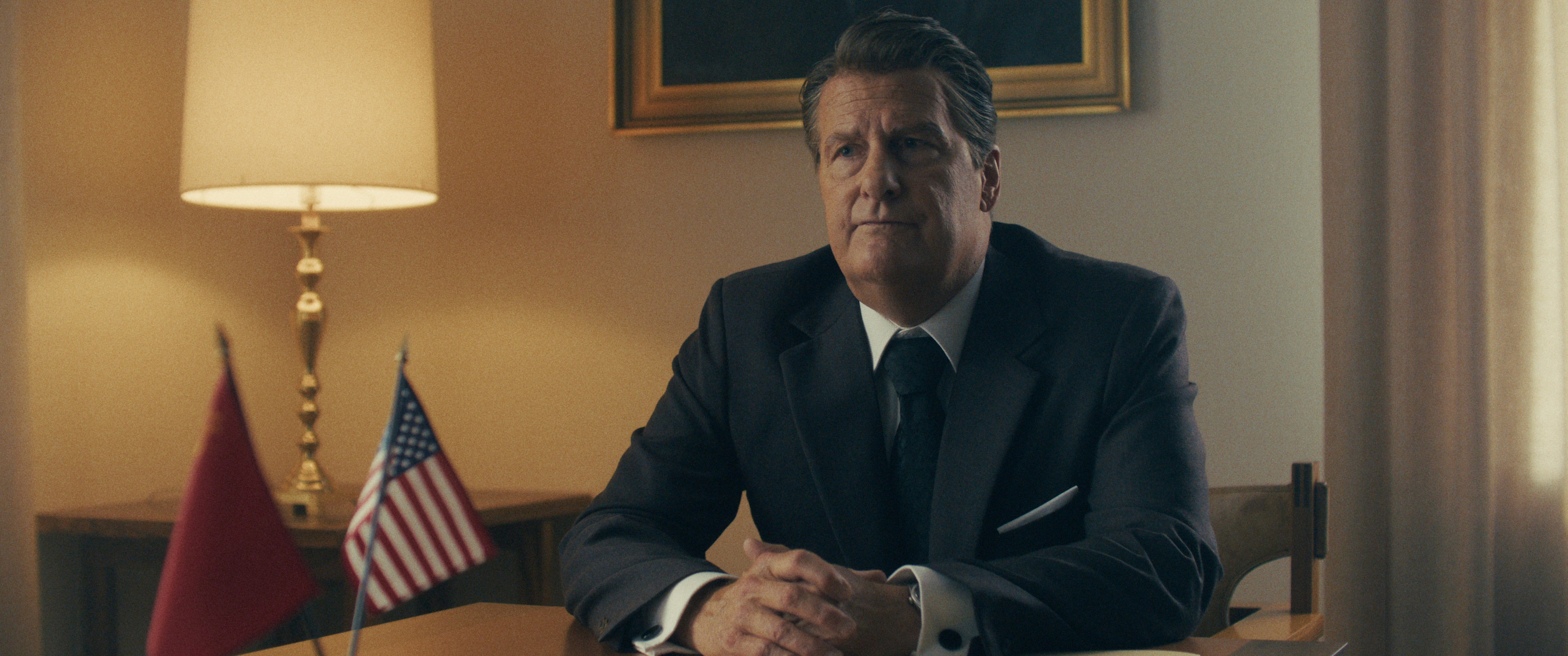

Jared Harris plays Mikhail Gorbachev and Jeff Daniels plays Ronald Reagan in The Brink of War, which also stars J.K. Simmons. The film was shot largely inside Höfði House, where the real talks took place forty years ago. Photos: Courtesy of Angel Studios,
Jared Harris plays Mikhail Gorbachev and Jeff Daniels plays Ronald Reagan in The Brink of War, which also stars J.K. Simmons. The film was shot largely inside Höfði House, where the real talks took place forty years ago. Photos: Courtesy of Angel Studios,
Jared Harris plays Mikhail Gorbachev and Jeff Daniels plays Ronald Reagan in The Brink of War, which also stars J.K. Simmons. The film was shot largely inside Höfði House, where the real talks took place forty years ago. Photos: Courtesy of Angel Studios,
The House on the Shore
The House on the Shore
The House on the Shore
Forty years after those October meetings, Höfði continues to watch over the shoreline. The historic estate was recently brought back into the cinematic spotlight for The Brink of War, a historical drama chronicling the summit, written and directed by Michael Russell Gunn and starring Jeff Daniels as Reagan and Jared Harris as Gorbachev.
Filming took place directly inside the original rooms rather than on a soundstage. Because nails could not touch the historic walls, the art department built free-standing interior walls within them, creating other locations without marking the real ones. The chairs used by the lead actors were the original leather seats from the 1986 session, and several of the paintings on the walls were the ones that hung there that weekend, loaned once again by local museums.
Generations intertwined on set. The production’s prop master, Nína Óskarsdóttir, was born in Reykjavík one month before the summit. Her mother, a linguist who had lived in Moscow, was invited to interpret for Gorbachev but chose instead to stay home and care for her infant daughter. Forty years later, that daughter was responsible for outfitting the very same rooms, down to a pair of vintage miniature flags made for the 1986 summit, mounted on a hand-carved stand of Icelandic lava rock.
Today, visitors can walk to Höfði from downtown Reykjavík in about twenty minutes, continuing past Sólfarið, the Sun Voyager sculpture, along the northern coastal promenade. The building remains reserved for official municipal receptions and is not open for public walk-ins, but its quiet exterior offers a thoughtful vantage point. Against the expanse of the bay, with Mount Esja across the water, it stands where it stood: the small white house that held the conversation, on the shore of the small capital that made room for it.
Forty years after those October meetings, Höfði continues to watch over the shoreline. The historic estate was recently brought back into the cinematic spotlight for The Brink of War, a historical drama chronicling the summit, written and directed by Michael Russell Gunn and starring Jeff Daniels as Reagan and Jared Harris as Gorbachev.
Filming took place directly inside the original rooms rather than on a soundstage. Because nails could not touch the historic walls, the art department built free-standing interior walls within them, creating other locations without marking the real ones. The chairs used by the lead actors were the original leather seats from the 1986 session, and several of the paintings on the walls were the ones that hung there that weekend, loaned once again by local museums.
Generations intertwined on set. The production’s prop master, Nína Óskarsdóttir, was born in Reykjavík one month before the summit. Her mother, a linguist who had lived in Moscow, was invited to interpret for Gorbachev but chose instead to stay home and care for her infant daughter. Forty years later, that daughter was responsible for outfitting the very same rooms, down to a pair of vintage miniature flags made for the 1986 summit, mounted on a hand-carved stand of Icelandic lava rock.
Today, visitors can walk to Höfði from downtown Reykjavík in about twenty minutes, continuing past Sólfarið, the Sun Voyager sculpture, along the northern coastal promenade. The building remains reserved for official municipal receptions and is not open for public walk-ins, but its quiet exterior offers a thoughtful vantage point. Against the expanse of the bay, with Mount Esja across the water, it stands where it stood: the small white house that held the conversation, on the shore of the small capital that made room for it.
Forty years after those October meetings, Höfði continues to watch over the shoreline. The historic estate was recently brought back into the cinematic spotlight for The Brink of War, a historical drama chronicling the summit, written and directed by Michael Russell Gunn and starring Jeff Daniels as Reagan and Jared Harris as Gorbachev.
Filming took place directly inside the original rooms rather than on a soundstage. Because nails could not touch the historic walls, the art department built free-standing interior walls within them, creating other locations without marking the real ones. The chairs used by the lead actors were the original leather seats from the 1986 session, and several of the paintings on the walls were the ones that hung there that weekend, loaned once again by local museums.
Generations intertwined on set. The production’s prop master, Nína Óskarsdóttir, was born in Reykjavík one month before the summit. Her mother, a linguist who had lived in Moscow, was invited to interpret for Gorbachev but chose instead to stay home and care for her infant daughter. Forty years later, that daughter was responsible for outfitting the very same rooms, down to a pair of vintage miniature flags made for the 1986 summit, mounted on a hand-carved stand of Icelandic lava rock.
Today, visitors can walk to Höfði from downtown Reykjavík in about twenty minutes, continuing past Sólfarið, the Sun Voyager sculpture, along the northern coastal promenade. The building remains reserved for official municipal receptions and is not open for public walk-ins, but its quiet exterior offers a thoughtful vantage point. Against the expanse of the bay, with Mount Esja across the water, it stands where it stood: the small white house that held the conversation, on the shore of the small capital that made room for it.