•
Can Lava Shape the Cities of Tomorrow?
Read Time
2 min
•
Can Lava Shape the Cities of Tomorrow?
Read Time
2 min
•
Can Lava Shape the Cities of Tomorrow?
Read Time
2 min
This is a generated video imagining Lavaforming, an experimental concept by Arnhildur Pálmadóttir and s.ap architects that explores whether Icelandic lava could one day be used as a sustainable building material. Credit: s.ap architects
This is a generated video imagining Lavaforming, an experimental concept by Arnhildur Pálmadóttir and s.ap architects that explores whether Icelandic lava could one day be used as a sustainable building material. Credit: s.ap architects
This is a generated video imagining Lavaforming, an experimental concept by Arnhildur Pálmadóttir and s.ap architects that explores whether Icelandic lava could one day be used as a sustainable building material. Credit: s.ap architects
An Icelandic architect dares to ask, "What if we stopped fighting nature and started building with it?"
Volcanoes are usually seen as destructive forces. In Iceland, they have shaped the land for millennia, sometimes violently, sometimes serenely. But what if lava, one of the most unpredictable materials on Earth, could be reimagined not as a threat, but as a resource?
That is the question behind Lavaforming, an ambitious and speculative design project led by Icelandic architect Arnhildur Pálmadóttir and her team at s.ap architects. First presented widely at the La Biennale di Venezia, the project envisions a future where controlled lava flows are channeled to construct resilient, low-impact cities, transforming geologic volatility into architectural possibilities.
An Icelandic architect dares to ask, "What if we stopped fighting nature and started building with it?"
Volcanoes are usually seen as destructive forces. In Iceland, they have shaped the land for millennia, sometimes violently, sometimes serenely. But what if lava, one of the most unpredictable materials on Earth, could be reimagined not as a threat, but as a resource?
That is the question behind Lavaforming, an ambitious and speculative design project led by Icelandic architect Arnhildur Pálmadóttir and her team at s.ap architects. First presented widely at the La Biennale di Venezia, the project envisions a future where controlled lava flows are channeled to construct resilient, low-impact cities, transforming geologic volatility into architectural possibilities.
An Icelandic architect dares to ask, "What if we stopped fighting nature and started building with it?"
Volcanoes are usually seen as destructive forces. In Iceland, they have shaped the land for millennia, sometimes violently, sometimes serenely. But what if lava, one of the most unpredictable materials on Earth, could be reimagined not as a threat, but as a resource?
That is the question behind Lavaforming, an ambitious and speculative design project led by Icelandic architect Arnhildur Pálmadóttir and her team at s.ap architects. First presented widely at the La Biennale di Venezia, the project envisions a future where controlled lava flows are channeled to construct resilient, low-impact cities, transforming geologic volatility into architectural possibilities.
Rethinking Materials in Modern Architecture
The global construction industry is responsible for nearly 40% of annual CO₂ emissions, with cement production alone accounting for approximately 8% of that total. The sector is also a major consumer of raw materials, using over 50 percent of all extracted resources worldwide. Heavily reliant on concrete, steel, and other high-impact materials, today’s building practices are environmentally costly and increasingly unsustainable.
For perspective, between 2011 and 2013, China used more cement than the United States did in the entire 20th century, according to the U.S. Geological Survey, a striking measure of how unsustainable current practices have become. This striking comparison underscores the profound impact of traditional construction materials on the planet, which continues to occur at an unsustainable scale.
Lavaforming proposes a radical alternative. What if buildings could be cast from lava itself and remelted, shaped, and cut into strong, glass-like forms? Iceland, with its abundant basalt and active geology, provides a natural testing ground for this vision. Through real-world experiments, the team has demonstrated how lava and volcanic rock can be transformed into durable, low-impact building elements, suggesting an entirely new material supply for architecture rooted in place and geology.
Backed by real-world experimentation, the team has created bricks and columns from basalt and lava flows, natural materials Iceland has in abundance. These components are not just conceptual art pieces. These components are not just conceptual art pieces; they point to a viable, hyper-local material system rooted in sustainability and circular design.
“This project is about shifting perspective,” says Pálmadóttir. “We imagine the year 2150. What would it mean to live in a lava-built city? What would that change about architecture, about how we relate to the land and to each other?”
Rethinking Materials in Modern Architecture
The global construction industry is responsible for nearly 40% of annual CO₂ emissions, with cement production alone accounting for approximately 8% of that total. The sector is also a major consumer of raw materials, using over 50 percent of all extracted resources worldwide. Heavily reliant on concrete, steel, and other high-impact materials, today’s building practices are environmentally costly and increasingly unsustainable.
For perspective, between 2011 and 2013, China used more cement than the United States did in the entire 20th century, according to the U.S. Geological Survey, a striking measure of how unsustainable current practices have become. This striking comparison underscores the profound impact of traditional construction materials on the planet, which continues to occur at an unsustainable scale.
Lavaforming proposes a radical alternative. What if buildings could be cast from lava itself and remelted, shaped, and cut into strong, glass-like forms? Iceland, with its abundant basalt and active geology, provides a natural testing ground for this vision. Through real-world experiments, the team has demonstrated how lava and volcanic rock can be transformed into durable, low-impact building elements, suggesting an entirely new material supply for architecture rooted in place and geology.
Backed by real-world experimentation, the team has created bricks and columns from basalt and lava flows, natural materials Iceland has in abundance. These components are not just conceptual art pieces. These components are not just conceptual art pieces; they point to a viable, hyper-local material system rooted in sustainability and circular design.
“This project is about shifting perspective,” says Pálmadóttir. “We imagine the year 2150. What would it mean to live in a lava-built city? What would that change about architecture, about how we relate to the land and to each other?”
Rethinking Materials in Modern Architecture
The global construction industry is responsible for nearly 40% of annual CO₂ emissions, with cement production alone accounting for approximately 8% of that total. The sector is also a major consumer of raw materials, using over 50 percent of all extracted resources worldwide. Heavily reliant on concrete, steel, and other high-impact materials, today’s building practices are environmentally costly and increasingly unsustainable.
For perspective, between 2011 and 2013, China used more cement than the United States did in the entire 20th century, according to the U.S. Geological Survey, a striking measure of how unsustainable current practices have become. This striking comparison underscores the profound impact of traditional construction materials on the planet, which continues to occur at an unsustainable scale.
Lavaforming proposes a radical alternative. What if buildings could be cast from lava itself and remelted, shaped, and cut into strong, glass-like forms? Iceland, with its abundant basalt and active geology, provides a natural testing ground for this vision. Through real-world experiments, the team has demonstrated how lava and volcanic rock can be transformed into durable, low-impact building elements, suggesting an entirely new material supply for architecture rooted in place and geology.
Backed by real-world experimentation, the team has created bricks and columns from basalt and lava flows, natural materials Iceland has in abundance. These components are not just conceptual art pieces. These components are not just conceptual art pieces; they point to a viable, hyper-local material system rooted in sustainability and circular design.
“This project is about shifting perspective,” says Pálmadóttir. “We imagine the year 2150. What would it mean to live in a lava-built city? What would that change about architecture, about how we relate to the land and to each other?”
These images highlight Iceland’s unique relationship with lava, from the 2021 Geldingadalir eruption and volcanic landscapes to the visionary architectural concepts of Arnhildur Pálmadóttir and her team at s.ap architects.
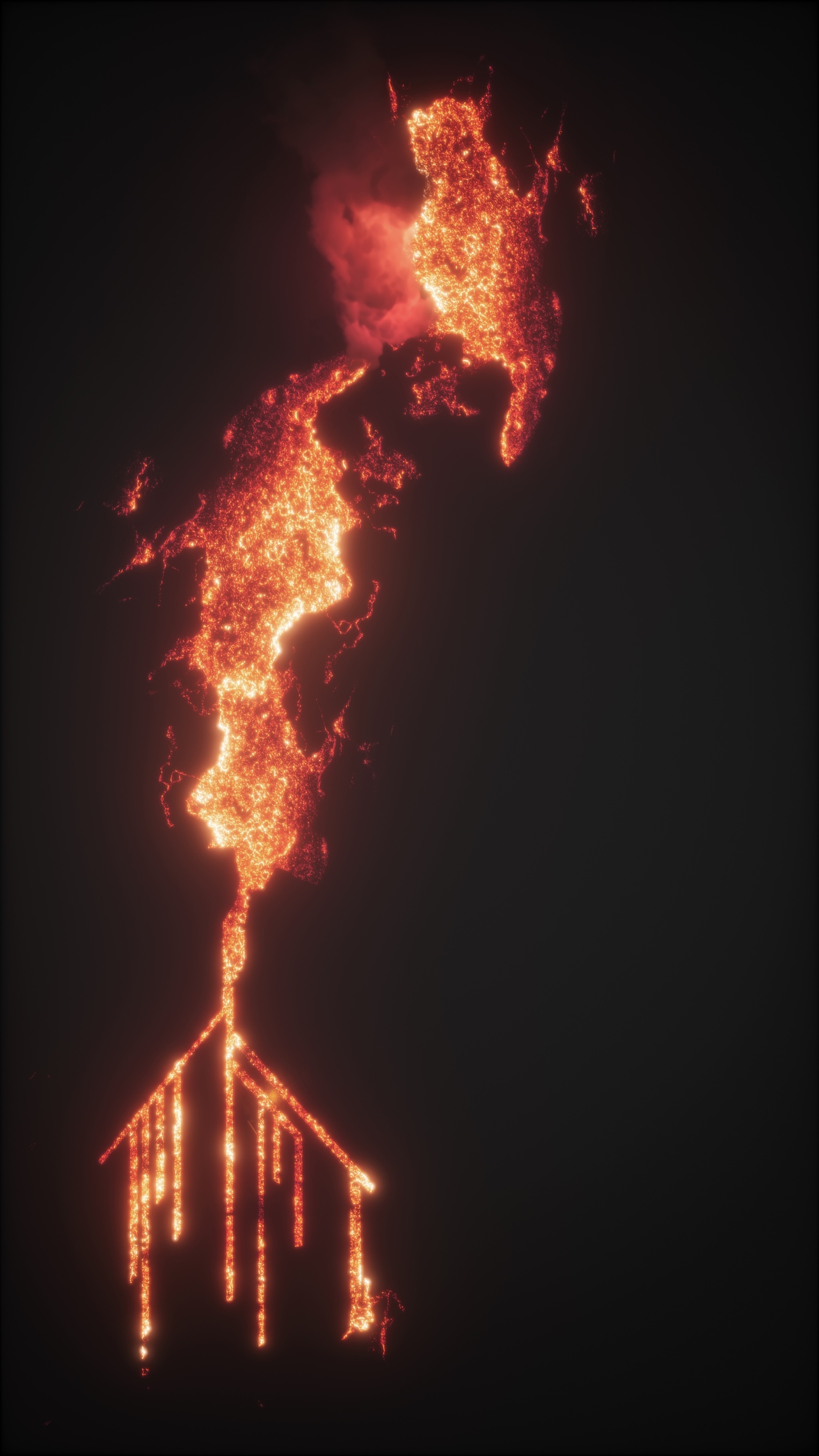
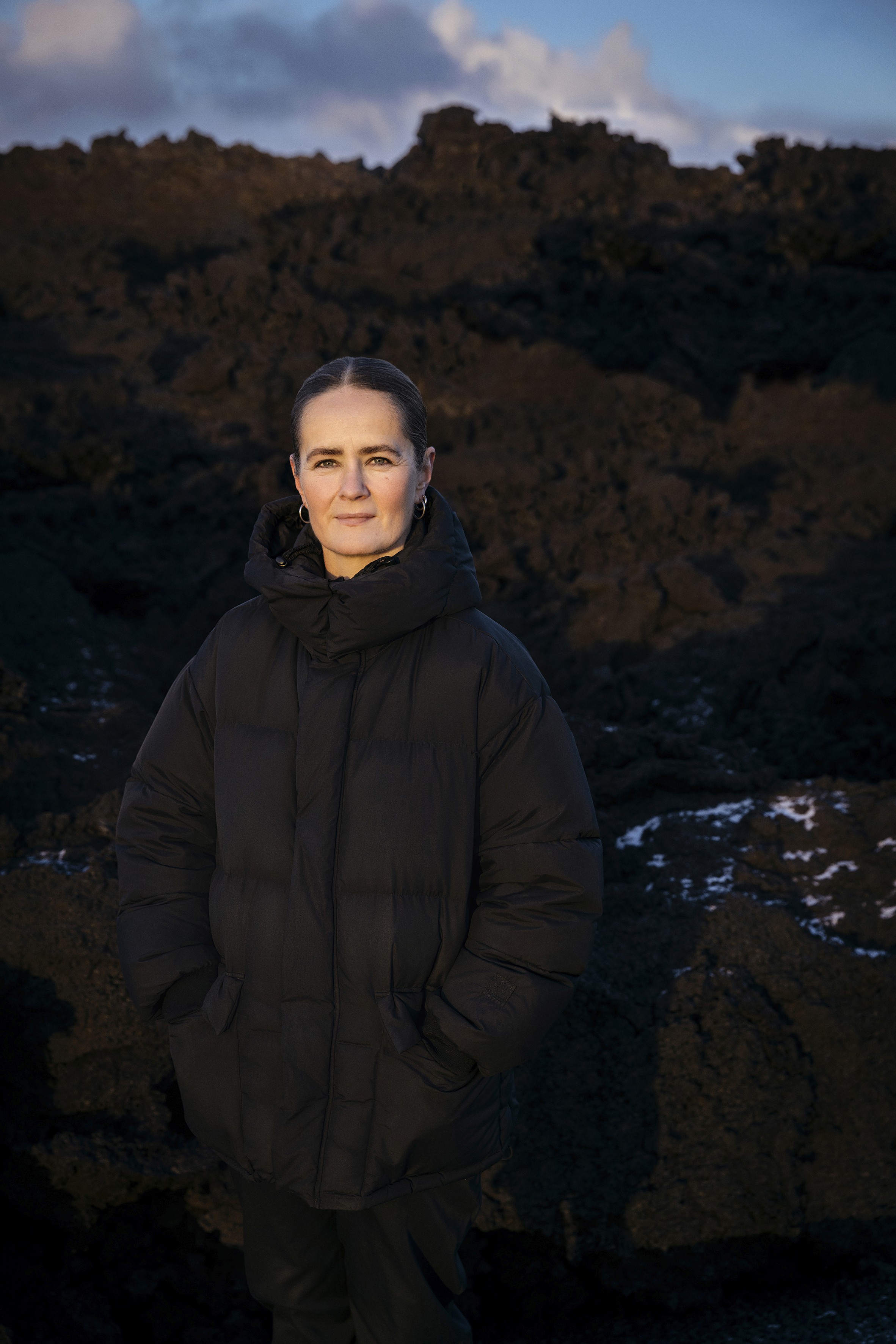
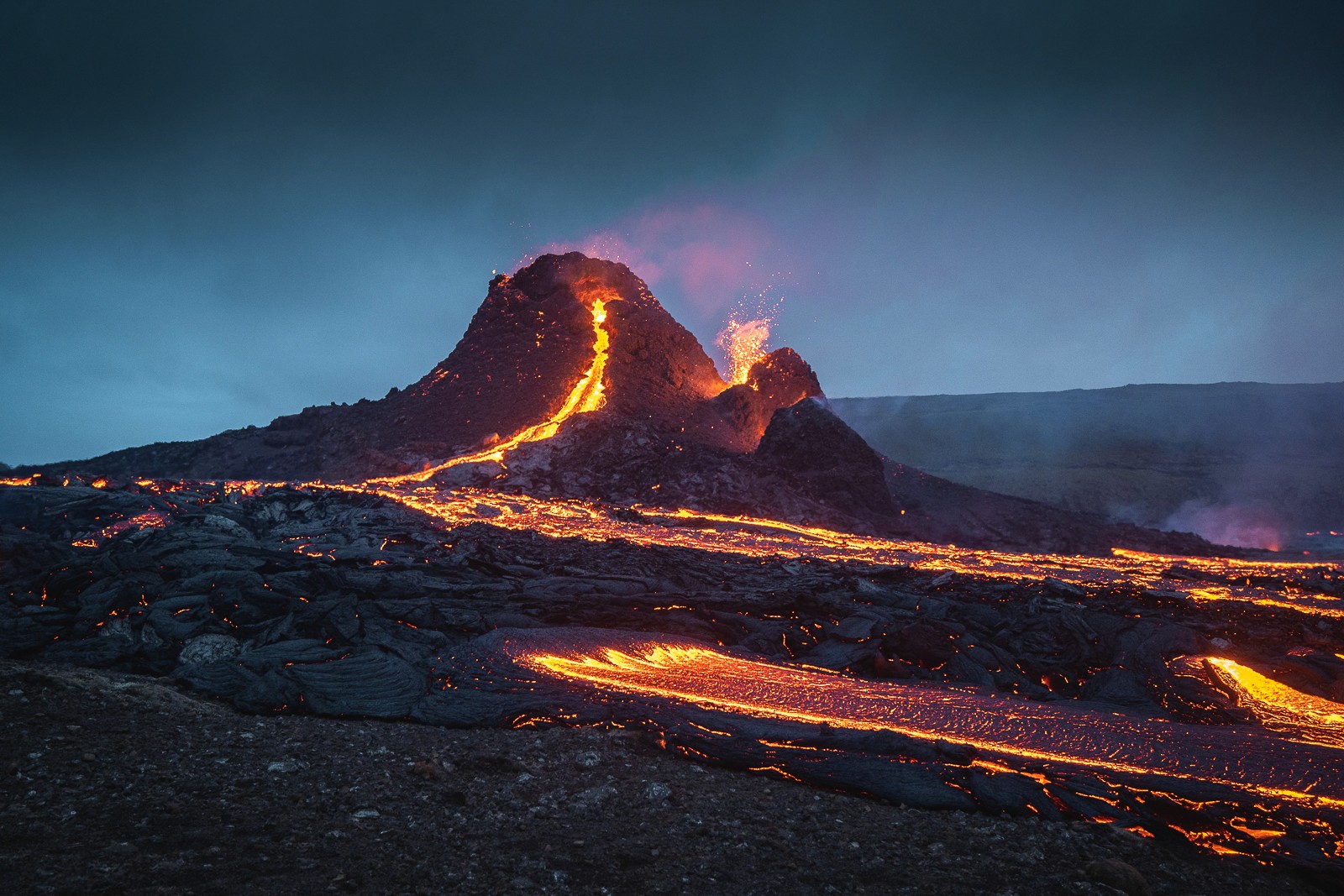
These images highlight Iceland’s unique relationship with lava, from the 2021 Geldingadalir eruption and volcanic landscapes to the visionary architectural concepts of Arnhildur Pálmadóttir and her team at s.ap architects.
These images highlight Iceland’s unique relationship with lava, from the 2021 Geldingadalir eruption and volcanic landscapes to the visionary architectural concepts of Arnhildur Pálmadóttir and her team at s.ap architects.
Lava Formed Visions of the Future from Iceland to Venice
When Iceland debuted its first-ever architecture pavilion at La Biennale di Venezia, it didn’t showcase a traditional model. Instead, it posed a radical question to the world’s most prestigious design audience: What if we could build cities from lava?
Venice, a city built on shifting ground and defined by its complex relationship with land and water, was the ideal place to explore that idea. Here, Lavaforming invited visitors to rethink not just materials, but the future of architecture itself.
Led by Arnhildur Pálmadóttir of s.ap architects, the Icelandic team, comprising Arnar Skarphéðinsson, Björg Skarphéðinsdóttir, and Sukanya Mukherjee, presented research on how basalt and lava, abundant in Iceland’s volcanic terrain, can be transformed into durable, low-impact building elements. Their work was grounded in geology, shaped by design, and rooted in Iceland’s unique landscape.
To extend the vision, the team collaborated with writer Andri Snær Magnason and musician-technologist Jack Armitage on an animated short film. Through six fictional voices, the film imagines daily life in a lava-built city, offering not only a new material but a new perspective.
Commissioned by Iceland Design and Architecture with support from the Ministry of Culture and Business Affairs, the project marked a milestone for Iceland’s creative industries, proving that small nations can launch big ideas into global conversations.
“Projects like this show how creative industries can help reframe climate challenges as opportunities,” said Logi Einarsson, Minister of Culture and Innovation. “We need new tools, new materials, and new narratives. Iceland is uniquely placed to offer all three.”
Lava Formed Visions of the Future from Iceland to Venice
When Iceland debuted its first-ever architecture pavilion at La Biennale di Venezia, it didn’t showcase a traditional model. Instead, it posed a radical question to the world’s most prestigious design audience: What if we could build cities from lava?
Venice, a city built on shifting ground and defined by its complex relationship with land and water, was the ideal place to explore that idea. Here, Lavaforming invited visitors to rethink not just materials, but the future of architecture itself.
Led by Arnhildur Pálmadóttir of s.ap architects, the Icelandic team, comprising Arnar Skarphéðinsson, Björg Skarphéðinsdóttir, and Sukanya Mukherjee, presented research on how basalt and lava, abundant in Iceland’s volcanic terrain, can be transformed into durable, low-impact building elements. Their work was grounded in geology, shaped by design, and rooted in Iceland’s unique landscape.
To extend the vision, the team collaborated with writer Andri Snær Magnason and musician-technologist Jack Armitage on an animated short film. Through six fictional voices, the film imagines daily life in a lava-built city, offering not only a new material but a new perspective.
Commissioned by Iceland Design and Architecture with support from the Ministry of Culture and Business Affairs, the project marked a milestone for Iceland’s creative industries, proving that small nations can launch big ideas into global conversations.
“Projects like this show how creative industries can help reframe climate challenges as opportunities,” said Logi Einarsson, Minister of Culture and Innovation. “We need new tools, new materials, and new narratives. Iceland is uniquely placed to offer all three.”
Lava Formed Visions of the Future from Iceland to Venice
When Iceland debuted its first-ever architecture pavilion at La Biennale di Venezia, it didn’t showcase a traditional model. Instead, it posed a radical question to the world’s most prestigious design audience: What if we could build cities from lava?
Venice, a city built on shifting ground and defined by its complex relationship with land and water, was the ideal place to explore that idea. Here, Lavaforming invited visitors to rethink not just materials, but the future of architecture itself.
Led by Arnhildur Pálmadóttir of s.ap architects, the Icelandic team, comprising Arnar Skarphéðinsson, Björg Skarphéðinsdóttir, and Sukanya Mukherjee, presented research on how basalt and lava, abundant in Iceland’s volcanic terrain, can be transformed into durable, low-impact building elements. Their work was grounded in geology, shaped by design, and rooted in Iceland’s unique landscape.
To extend the vision, the team collaborated with writer Andri Snær Magnason and musician-technologist Jack Armitage on an animated short film. Through six fictional voices, the film imagines daily life in a lava-built city, offering not only a new material but a new perspective.
Commissioned by Iceland Design and Architecture with support from the Ministry of Culture and Business Affairs, the project marked a milestone for Iceland’s creative industries, proving that small nations can launch big ideas into global conversations.
“Projects like this show how creative industries can help reframe climate challenges as opportunities,” said Logi Einarsson, Minister of Culture and Innovation. “We need new tools, new materials, and new narratives. Iceland is uniquely placed to offer all three.”
From Volcanic Island to Global Testbed
In a time of ecological predicaments, Lavaforming is a reminder that creativity is more than expression. It is a form of responsibility. It asks architects, designers, artists, and cultural leaders to expand their tools, imagine beyond convention, and unite to work with what we have and the forces that shape our world.
Could molten building blocks of Earth construct the buildings of the future?
From Volcanic Island to Global Testbed
In a time of ecological predicaments, Lavaforming is a reminder that creativity is more than expression. It is a form of responsibility. It asks architects, designers, artists, and cultural leaders to expand their tools, imagine beyond convention, and unite to work with what we have and the forces that shape our world.
Could molten building blocks of Earth construct the buildings of the future?
From Volcanic Island to Global Testbed
In a time of ecological predicaments, Lavaforming is a reminder that creativity is more than expression. It is a form of responsibility. It asks architects, designers, artists, and cultural leaders to expand their tools, imagine beyond convention, and unite to work with what we have and the forces that shape our world.
Could molten building blocks of Earth construct the buildings of the future?