•
Turning CO₂ to Stone with Iceland's Carbon Removal Collaboration at Hellisheiði
Read Time
5 min
•
Turning CO₂ to Stone with Iceland's Carbon Removal Collaboration at Hellisheiði
Read Time
5 min
•
Turning CO₂ to Stone with Iceland's Carbon Removal Collaboration at Hellisheiði
Read Time
5 min

A pioneering partnership turning climate ambition into real-world action.
Every year, the world emits over 36 billion metric tons of CO₂. That’s roughly the weight of 6 billion African elephants—or 4.44 metric tons for every person on Earth. It’s a staggering figure, and renewable energy alone won’t erase it fast enough. To truly address the climate crisis, we don’t just need to cut emissions. We need to remove them from the atmosphere.
That's exactly what's happening in Iceland, where a groundbreaking collaboration is pulling carbon out of thin air and turning it into stone. At the Hellisheiði Geothermal Park, just outside Reykjavík, three companies: Climeworks, Carbfix, and ON Power are working together to operate one of the world's most advanced and scalable carbon removal systems.
A pioneering partnership turning climate ambition into real-world action.
Every year, the world emits over 36 billion metric tons of CO₂. That’s roughly the weight of 6 billion African elephants—or 4.44 metric tons for every person on Earth. It’s a staggering figure, and renewable energy alone won’t erase it fast enough. To truly address the climate crisis, we don’t just need to cut emissions. We need to remove them from the atmosphere.
That's exactly what's happening in Iceland, where a groundbreaking collaboration is pulling carbon out of thin air and turning it into stone. At the Hellisheiði Geothermal Park, just outside Reykjavík, three companies: Climeworks, Carbfix, and ON Power are working together to operate one of the world's most advanced and scalable carbon removal systems.
A pioneering partnership turning climate ambition into real-world action.
Every year, the world emits over 36 billion metric tons of CO₂. That’s roughly the weight of 6 billion African elephants—or 4.44 metric tons for every person on Earth. It’s a staggering figure, and renewable energy alone won’t erase it fast enough. To truly address the climate crisis, we don’t just need to cut emissions. We need to remove them from the atmosphere.
That's exactly what's happening in Iceland, where a groundbreaking collaboration is pulling carbon out of thin air and turning it into stone. At the Hellisheiði Geothermal Park, just outside Reykjavík, three companies: Climeworks, Carbfix, and ON Power are working together to operate one of the world's most advanced and scalable carbon removal systems.
Real-World Climate Solutions in Iceland
Together, three companies have created the world's first industrial-scale DAC + carbon mineralization facility, a real-world example of carbon removal, not just ambition.
Direct Air Capture with Climeworks
Climeworks, a Swiss climate tech company, uses Direct Air Capture (DAC) technology to remove CO₂ directly from the atmosphere. Large fans draw in ambient air and pass it through filters that trap CO₂ molecules, much like a sponge soaking up water.
Once the filter is full, it's heated using renewable energy to release pure, concentrated CO₂, which is then ready for permanent storage underground. This method enables carbon capture from virtually anywhere. Still, it is most efficient at industrial sites, making it a powerful tool for cleaning up legacy emissions already in the air.
Turning CO₂ Into Stone with Carbfix
Carbfix, an Icelandic innovation company, captures CO₂ and turns it into stone over a two-year process. Carbfix takes captured CO₂ (such as from Climeworks) and dissolves it in water, creating a fizzy, soda-like solution. This mixture is then injected deep into the underground layers of porous basalt rock, which is abundant in Iceland. Once underground, a natural chemical reaction begins: CO₂ bonds with the rock's minerals and gradually forms solid carbonate minerals. In less than two years, the gas will be converted into a permanent, stable, and safe form of carbon storage that won't leak back into the atmosphere.
ON Power’s Geothermal Backbone
ON Power operates Europe's largest geothermal power station at Hellisheiði, located about 30 minutes from Reykjavík. It provides the clean, renewable energy that powers the entire carbon removal process. This 100 percent geothermal energy not only runs the Climeworks capture system and Carbfix's mineralization process, but also supplies electricity and home heating for the greater Reykjavík area. It's the same reliable, renewable energy that supports daily life, now being used to drive breakthrough climate solutions.
Together, they've created the world's first industrial-scale DAC + carbon mineralization facility, a real-world example of carbon removal, not just ambition.
Real-World Climate Solutions in Iceland
Together, three companies have created the world's first industrial-scale DAC + carbon mineralization facility, a real-world example of carbon removal, not just ambition.
Direct Air Capture with Climeworks
Climeworks, a Swiss climate tech company, uses Direct Air Capture (DAC) technology to remove CO₂ directly from the atmosphere. Large fans draw in ambient air and pass it through filters that trap CO₂ molecules, much like a sponge soaking up water.
Once the filter is full, it's heated using renewable energy to release pure, concentrated CO₂, which is then ready for permanent storage underground. This method enables carbon capture from virtually anywhere. Still, it is most efficient at industrial sites, making it a powerful tool for cleaning up legacy emissions already in the air.
Turning CO₂ Into Stone with Carbfix
Carbfix, an Icelandic innovation company, captures CO₂ and turns it into stone over a two-year process. Carbfix takes captured CO₂ (such as from Climeworks) and dissolves it in water, creating a fizzy, soda-like solution. This mixture is then injected deep into the underground layers of porous basalt rock, which is abundant in Iceland. Once underground, a natural chemical reaction begins: CO₂ bonds with the rock's minerals and gradually forms solid carbonate minerals. In less than two years, the gas will be converted into a permanent, stable, and safe form of carbon storage that won't leak back into the atmosphere.
ON Power’s Geothermal Backbone
ON Power operates Europe's largest geothermal power station at Hellisheiði, located about 30 minutes from Reykjavík. It provides the clean, renewable energy that powers the entire carbon removal process. This 100 percent geothermal energy not only runs the Climeworks capture system and Carbfix's mineralization process, but also supplies electricity and home heating for the greater Reykjavík area. It's the same reliable, renewable energy that supports daily life, now being used to drive breakthrough climate solutions.
Together, they've created the world's first industrial-scale DAC + carbon mineralization facility, a real-world example of carbon removal, not just ambition.
Real-World Climate Solutions in Iceland
Together, three companies have created the world's first industrial-scale DAC + carbon mineralization facility, a real-world example of carbon removal, not just ambition.
Direct Air Capture with Climeworks
Climeworks, a Swiss climate tech company, uses Direct Air Capture (DAC) technology to remove CO₂ directly from the atmosphere. Large fans draw in ambient air and pass it through filters that trap CO₂ molecules, much like a sponge soaking up water.
Once the filter is full, it's heated using renewable energy to release pure, concentrated CO₂, which is then ready for permanent storage underground. This method enables carbon capture from virtually anywhere. Still, it is most efficient at industrial sites, making it a powerful tool for cleaning up legacy emissions already in the air.
Turning CO₂ Into Stone with Carbfix
Carbfix, an Icelandic innovation company, captures CO₂ and turns it into stone over a two-year process. Carbfix takes captured CO₂ (such as from Climeworks) and dissolves it in water, creating a fizzy, soda-like solution. This mixture is then injected deep into the underground layers of porous basalt rock, which is abundant in Iceland. Once underground, a natural chemical reaction begins: CO₂ bonds with the rock's minerals and gradually forms solid carbonate minerals. In less than two years, the gas will be converted into a permanent, stable, and safe form of carbon storage that won't leak back into the atmosphere.
ON Power’s Geothermal Backbone
ON Power operates Europe's largest geothermal power station at Hellisheiði, located about 30 minutes from Reykjavík. It provides the clean, renewable energy that powers the entire carbon removal process. This 100 percent geothermal energy not only runs the Climeworks capture system and Carbfix's mineralization process, but also supplies electricity and home heating for the greater Reykjavík area. It's the same reliable, renewable energy that supports daily life, now being used to drive breakthrough climate solutions.
Together, they've created the world's first industrial-scale DAC + carbon mineralization facility, a real-world example of carbon removal, not just ambition.
(L to R) ON Power’s geothermal plant and visitor exhibition at Hellisheiði, Iceland. Photo: ON Power. Carbfix captures CO₂ and injects it deep underground, where it reacts with basalt rock and turns to stone—shown here in its mineralized form. Photo: Carbfix. Two engineers stand in front of Climeworks’ Mammoth direct air capture (DAC) facility, the world’s largest carbon removal plant, capable of capturing up to 36,000 tons of CO₂ annually for permanent underground storage. Photo: Climeworks.
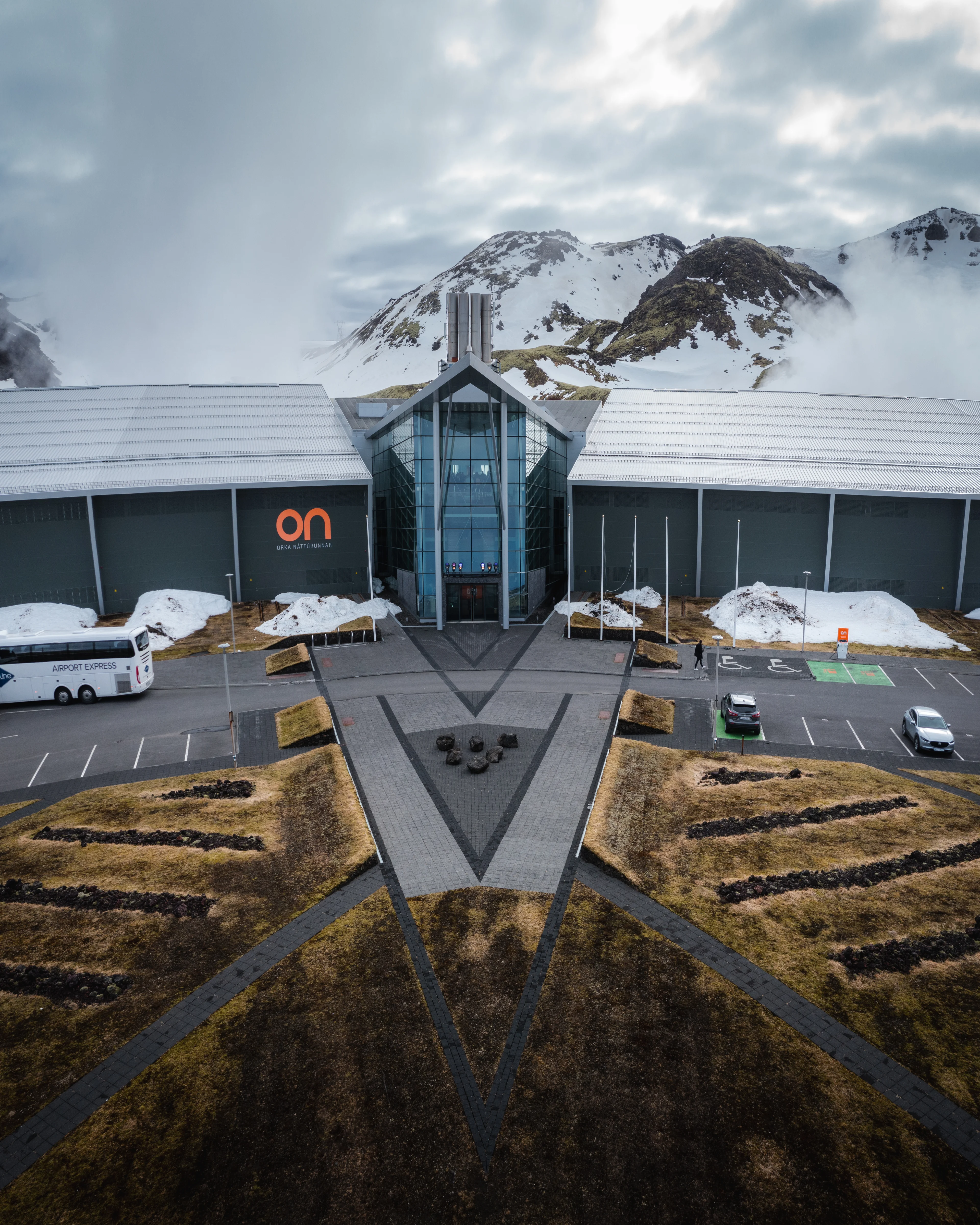
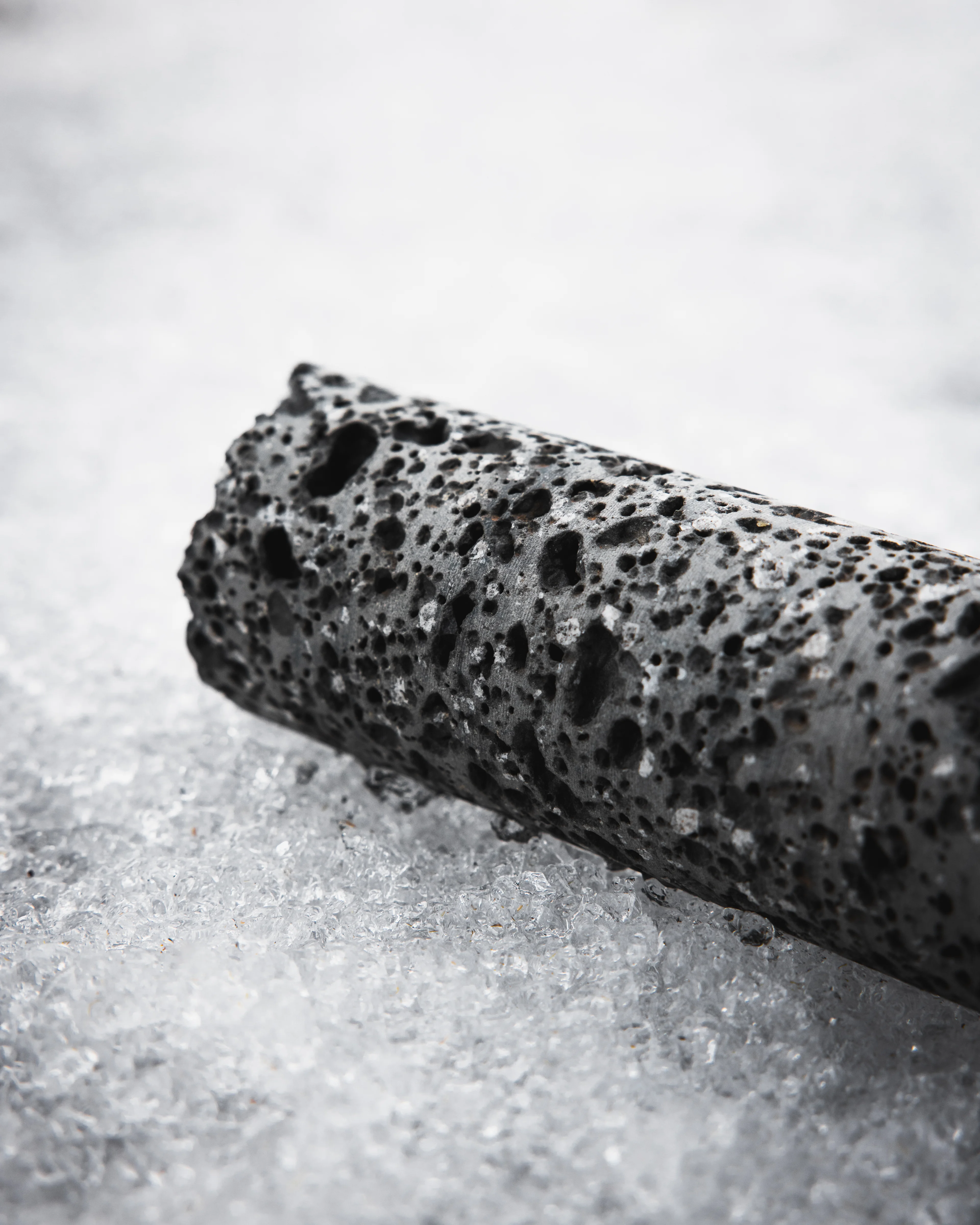
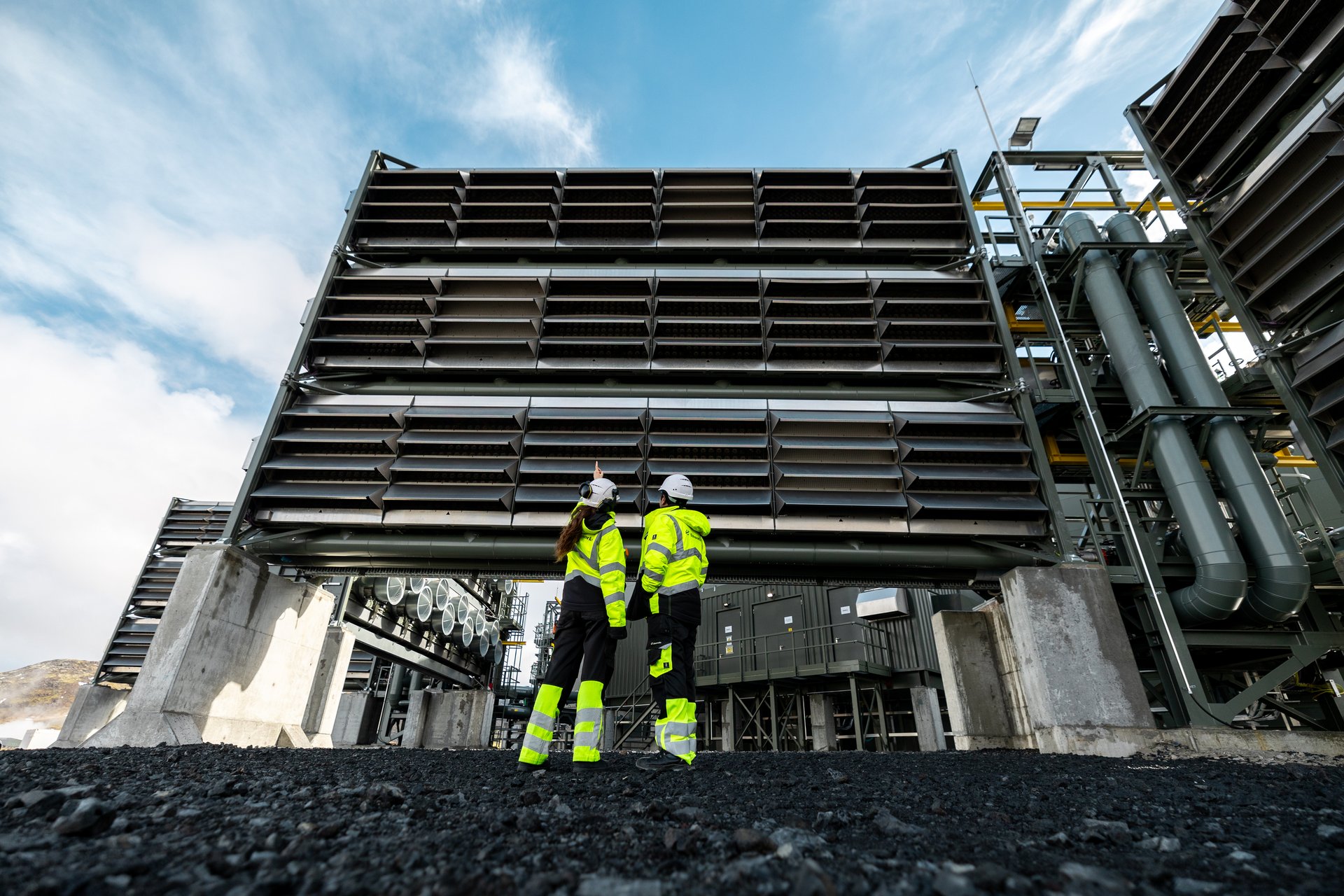
(L to R) ON Power’s geothermal plant and visitor exhibition at Hellisheiði, Iceland. Photo: ON Power. Carbfix captures CO₂ and injects it deep underground, where it reacts with basalt rock and turns to stone—shown here in its mineralized form. Photo: Carbfix. Two engineers stand in front of Climeworks’ Mammoth direct air capture (DAC) facility, the world’s largest carbon removal plant, capable of capturing up to 36,000 tons of CO₂ annually for permanent underground storage. Photo: Climeworks.
(L to R) ON Power’s geothermal plant and visitor exhibition at Hellisheiði, Iceland. Photo: ON Power. Carbfix captures CO₂ and injects it deep underground, where it reacts with basalt rock and turns to stone—shown here in its mineralized form. Photo: Carbfix. Two engineers stand in front of Climeworks’ Mammoth direct air capture (DAC) facility, the world’s largest carbon removal plant, capable of capturing up to 36,000 tons of CO₂ annually for permanent underground storage. Photo: Climeworks.
Why Iceland?
A company like Climeworks could have built its system almost anywhere in the world. But Iceland offered something rare: a fully renewable and cooperative testbed for climate innovation.
The Hellisheiði site is more than a power plant; it is the foundation of a growing Geothermal Park, where clean-tech companies work side by side to turn ideas into scalable solutions. The park offers direct access to renewable power, abundant water, land zoned for development, and infrastructure, enabling companies to test, build, and iterate in real-time.
Here, collaboration is not just encouraged, it is part of the blueprint.
The park's circular ecosystem enables companies to share heat, water, and infrastructure, transforming what were formerly considered waste streams into valuable opportunities. This shared-value approach is a hallmark of Iceland's sustainability mindset, and one of the reasons the park is becoming a global hub for climate solutions.
Why Iceland?
A company like Climeworks could have built its system almost anywhere in the world. But Iceland offered something rare: a fully renewable and cooperative testbed for climate innovation.
The Hellisheiði site is more than a power plant; it is the foundation of a growing Geothermal Park, where clean-tech companies work side by side to turn ideas into scalable solutions. The park offers direct access to renewable power, abundant water, land zoned for development, and infrastructure, enabling companies to test, build, and iterate in real-time.
Here, collaboration is not just encouraged, it is part of the blueprint.
The park's circular ecosystem enables companies to share heat, water, and infrastructure, transforming what were formerly considered waste streams into valuable opportunities. This shared-value approach is a hallmark of Iceland's sustainability mindset, and one of the reasons the park is becoming a global hub for climate solutions.
Why Iceland?
A company like Climeworks could have built its system almost anywhere in the world. But Iceland offered something rare: a fully renewable and cooperative testbed for climate innovation.
The Hellisheiði site is more than a power plant; it is the foundation of a growing Geothermal Park, where clean-tech companies work side by side to turn ideas into scalable solutions. The park offers direct access to renewable power, abundant water, land zoned for development, and infrastructure, enabling companies to test, build, and iterate in real-time.
Here, collaboration is not just encouraged, it is part of the blueprint.
The park's circular ecosystem enables companies to share heat, water, and infrastructure, transforming what were formerly considered waste streams into valuable opportunities. This shared-value approach is a hallmark of Iceland's sustainability mindset, and one of the reasons the park is becoming a global hub for climate solutions.
Scaling Up is the Future of Carbon Removal
When the DAC pilot launched in 2017, it captured around 50 tons of CO₂ annually, a small but critical first step in the testing phase. Since then, Carbfix and Climeworks have advanced toward commercial scale, aiming to reduce removal costs to around $25 per ton and expand to megaton-scale carbon removal.
Unlike traditional offsets, this process is measurable, permanent, and verifiable. A vital tool for hard-to-decarbonize industries and for global climate targets that rely on negative emissions to operate. At these price points, major industries, such as aluminum, energy, and technology companies, are seeking to offset emissions at the Hellisheiði Geothermal Park.
Most importantly, these technologies are being validated in the field and have the potential to scale and be implemented globally, helping meet international climate targets.
Scaling Up is the Future of Carbon Removal
When the DAC pilot launched in 2017, it captured around 50 tons of CO₂ annually, a small but critical first step in the testing phase. Since then, Carbfix and Climeworks have advanced toward commercial scale, aiming to reduce removal costs to around $25 per ton and expand to megaton-scale carbon removal.
Unlike traditional offsets, this process is measurable, permanent, and verifiable. A vital tool for hard-to-decarbonize industries and for global climate targets that rely on negative emissions to operate. At these price points, major industries, such as aluminum, energy, and technology companies, are seeking to offset emissions at the Hellisheiði Geothermal Park.
Most importantly, these technologies are being validated in the field and have the potential to scale and be implemented globally, helping meet international climate targets.
Scaling Up is the Future of Carbon Removal
When the DAC pilot launched in 2017, it captured around 50 tons of CO₂ annually, a small but critical first step in the testing phase. Since then, Carbfix and Climeworks have advanced toward commercial scale, aiming to reduce removal costs to around $25 per ton and expand to megaton-scale carbon removal.
Unlike traditional offsets, this process is measurable, permanent, and verifiable. A vital tool for hard-to-decarbonize industries and for global climate targets that rely on negative emissions to operate. At these price points, major industries, such as aluminum, energy, and technology companies, are seeking to offset emissions at the Hellisheiði Geothermal Park.
Most importantly, these technologies are being validated in the field and have the potential to scale and be implemented globally, helping meet international climate targets.
A Launchpad for Climate Solutions
Today, the Hellisheiði Geothermal Park is positioning itself as a launchpad for scalable carbon management, actively welcoming new partners from start-ups to researchers to industrial players.
Iceland offers more than clean power. It provides a culture of cooperation, a landscape rich in renewable resources, and a commitment to innovation that turns climate ambition into action.
As the world searches for durable carbon removal strategies, Iceland isn't just pointing the way; it is building the path.
A Launchpad for Climate Solutions
Today, the Hellisheiði Geothermal Park is positioning itself as a launchpad for scalable carbon management, actively welcoming new partners from start-ups to researchers to industrial players.
Iceland offers more than clean power. It provides a culture of cooperation, a landscape rich in renewable resources, and a commitment to innovation that turns climate ambition into action.
As the world searches for durable carbon removal strategies, Iceland isn't just pointing the way; it is building the path.
A Launchpad for Climate Solutions
Today, the Hellisheiði Geothermal Park is positioning itself as a launchpad for scalable carbon management, actively welcoming new partners from start-ups to researchers to industrial players.
Iceland offers more than clean power. It provides a culture of cooperation, a landscape rich in renewable resources, and a commitment to innovation that turns climate ambition into action.
As the world searches for durable carbon removal strategies, Iceland isn't just pointing the way; it is building the path.